Mercedes DPF Fault
What if the dashboard warning you’re tempted to ignore is an early sign of a fault that’s better caught sooner than later?
No noise. No obvious change in how the car drives. Just an unfamiliar symbol on the dashboard, and no clear indication of what happens if you leave it.
You can’t tell from the warning alone whether this needs immediate action or whether it can wait. And what’s behind it isn’t obvious from the dashboard: it might be the diesel particulate filter, or it might be something else affecting the same system. Either way, it’s pointing to something that’s worth looking into rather than something that will clear on its own.
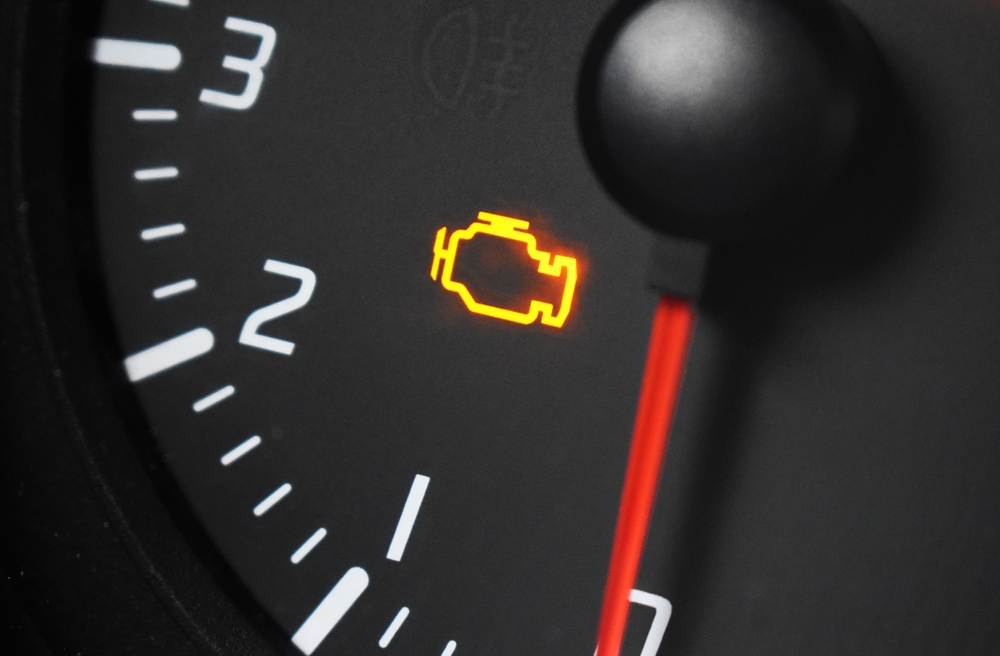
A dashboard warning on a Mercedes diesel, most often the engine management light, can point to trouble somewhere in the emissions system, the diesel particulate filter included. More than one thing can lie behind it: soot building up inside the filter, incomplete regeneration cycles, or a separate fault stopping the system from doing its job. Delay assessment, and risk limp mode, a failed MOT, and a bill that only grows the longer it waits.
This guide explains what the diesel particulate filter does, how regeneration works, why DPF-related faults can trigger a dashboard warning, and what to expect when you bring your Mercedes to JDK Automotive, Camberley.

How the Diesel Particulate Filter Protects Your Mercedes
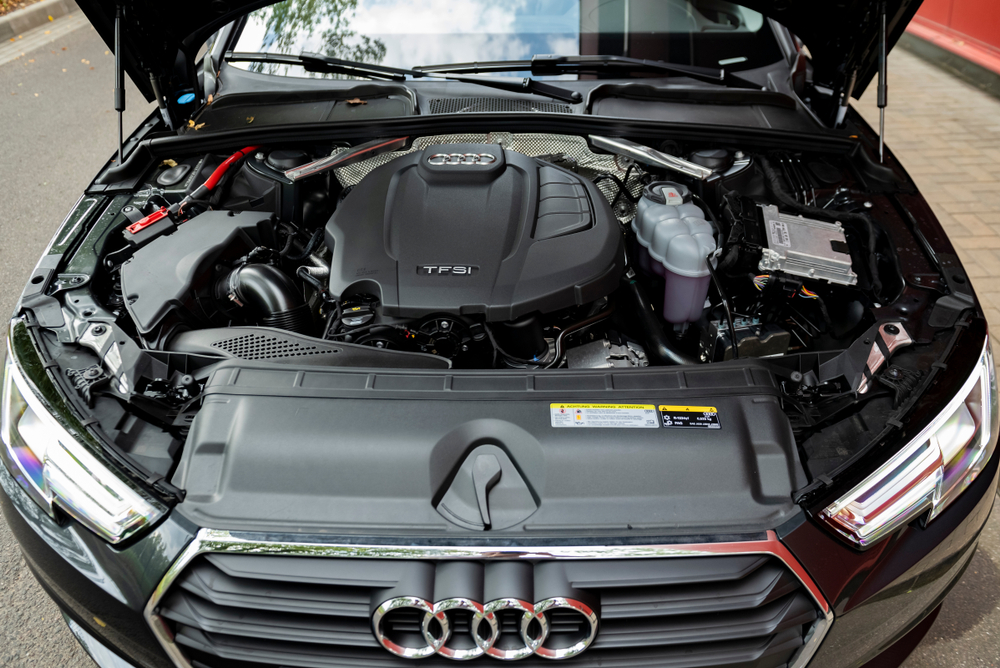
The diesel particulate filter, or DPF, is fitted to the exhaust system of every Mercedes diesel. Its job is to capture the soot particles produced when diesel fuel burns, and stop them from reaching the air.
As you drive, soot gradually builds inside the filter. That’s part of the design. The filter catches it, but it isn’t meant to store it indefinitely.
Instead, your Mercedes runs a process called regeneration that raises the temperature in the filter so the accumulated soot is oxidised and reduced. When this runs as it should, you may not notice anything happening.
When regeneration doesn’t complete often enough, soot loading can increase, the filter becomes more restricted, and the engine management system may register a fault and bring on a dashboard warning.
Mercedes DPF Regeneration: The Process That Manages Soot Buildup
Mercedes DPF regeneration is the process your diesel uses to reduce the soot that collects inside the filter. Without it, soot would keep accumulating until the filter could no longer work.
The engine needs to reach the operating conditions that enable regeneration. In practice, that often means a sustained drive at a consistent speed once the engine is fully warmed up, though the exact conditions vary between Mercedes models and driving situations. Where needed, the engine management system can actively increase exhaust temperatures to support regeneration.
When those conditions are met, exhaust temperatures rise high enough for the accumulated soot to be oxidised and reduced. Mercedes DPF regeneration runs in the background without any action from the driver.
What matters is that this needs to happen regularly. How often varies depending on the vehicle, operating conditions, and the way you drive. When regeneration gets the chance to run, soot is kept under control.
When it doesn’t, soot can build up in the filter.
When Mercedes DPF Regeneration Cycles Don’t Complete
One common reason a DPF-related fault develops is that the car hasn’t had the conditions to complete regeneration. Short journeys, low-speed commuting, and trips that end before the engine reaches the sustained operating state it needs can all make this harder. If it happens repeatedly, soot can accumulate inside the filter and a fault may develop.
But driving patterns don’t tell the full story. An underlying fault in the engine, the emissions system, or the sensors that support regeneration can also prevent the cycle from completing correctly, even when the road would allow it.
The question is what stopped regeneration from finishing. Knowing there’s a fault is only the starting point. A thorough investigation needs to look beyond the warning itself.
If a DPF-related fault is suspected, having it looked at sooner rather than later gives you the widest range of options. Speak to JDK Automotive on 01276 535585, and we’ll talk you through what to expect.
What a Mercedes DPF Warning Actually Tells You
Depending on which Mercedes you drive, a DPF-related fault might surface as the engine management light, a filter symbol, or a message on the screen. Whatever form it takes, the warning by itself can’t pin down the precise problem.
It may be nothing more than a regeneration that keeps failing to finish. Equally, it could be a separate fault holding the system back. Those are two different situations with two different answers, which is why the sensible move is to have the cause identified rather than assumed.
Take note of anything the dashboard is asking of you, and book the car in if the warning won’t clear or keeps coming back. The sooner it is examined, the better your chances of establishing what’s wrong while the fix is still a smaller job.
Has a warning shown up that you think points to the DPF? Get in touch with JDK Automotive on 01276 535585. We’ll look into what’s going on and set out what comes next.
Why a Mercedes DPF Fault Is Worth Dealing With Early
Leaving a DPF issue unaddressed doesn’t buy you time. It costs you options.
A fault like this won’t necessarily deteriorate in a steady, predictable line. What tends to happen instead is that an unresolved cause turns a smaller job into a bigger, pricier one. As the filter grows more restricted, the flow of exhaust gas suffers, and the engine management system can adjust the way the car behaves. What you notice will hinge on the cause: perhaps the car pulling less strongly, a shift in fuel use, or the engine feeling rougher than it did.
Push on further, and the engine management system may cap the car’s performance and drop it into limp mode. Power falls away noticeably, and that’s a clear signal the fault needs looking at.
The MOT gives you another reason not to wait. On any diesel first used on or after 1 July 2008, an illuminated engine management light is enough on its own to fail the test. Beyond that, if whatever is triggering the warning is also affecting your emissions, that can keep the car from meeting the standards the MOT sets.
If the warning has been showing for a while, it’s worth getting it looked at. Contact JDK Automotive on 01276 535585, and we’ll give you a clear picture of the situation.
Our Approach to a Mercedes DPF Fault in Camberley
At JDK Automotive, Camberley, every DPF fault investigation starts with a conversation, not a code reader.
Our technicians ask when the warning first appeared, how the car has been responding since, and what kind of driving you do day to day. That picture matters because it shapes where the investigation goes next.
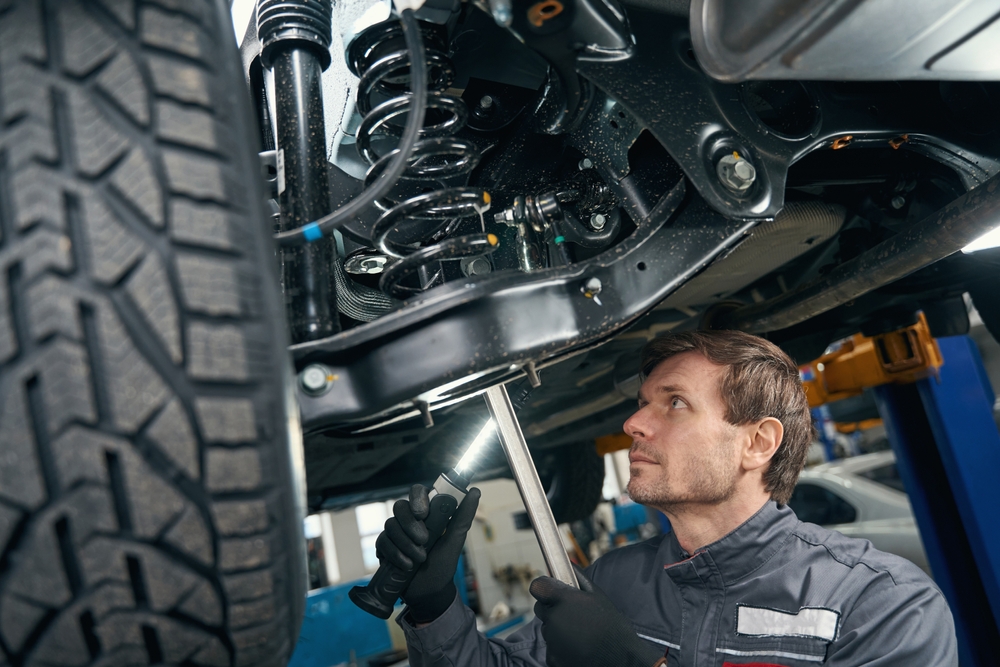
Our technicians then carry out a detailed technical evaluation using manufacturer-level software to reach data that a standard code reader can’t. They use it to look at what’s happening across the DPF system and work through why regeneration hasn’t been completing.
The goal isn’t to clear the warning. It’s to find the cause, deal with it, and make sure you understand what was wrong and what’s been done. Once we’ve identified the cause, we’ll explain what we’ve found and what needs to be done, and answer any questions before any work is carried out.
Every Mercedes is different, and the path forward depends on what our technicians find.
The Expertise and Equipment Behind a Mercedes DPF Investigation
A standard code reader might flag a DPF-related fault code. But a fault code alone rarely tells you why the problem has occurred.
So what does it take to answer that question?
Manufacturer-level software gives our technicians access to a much wider range of Mercedes-specific information: DPF-related values, sensor readings, and operating data that a standard tool can’t reach. That extra detail can make a real difference when tracing the underlying cause.
The reality is, the data on its own isn’t enough. A code that appears to point towards the DPF can have several possible causes, and working out which one applies takes a technician who understands Mercedes diesel systems and has seen these faults before.
It’s that pairing, an experienced technician and the right equipment, that makes the difference. At JDK Automotive, that’s what you get.
If your Mercedes has a warning on the dashboard and you suspect the DPF may be involved, our technicians in Camberley can help. Ring JDK Automotive on 01276 535585.
Why Choose JDK Automotive, Camberley, for Your Mercedes DPF Problem?
With Mercedes DPF faults, getting to the underlying cause is what matters. What looks like a DPF problem can sometimes come down to another fault affecting how the system works, so the right diagnosis is the starting point.
Our technicians at JDK Automotive, Camberley, work on Mercedes diesel models as part of their day-to-day workload. They bring the hands-on experience and manufacturer-level equipment to trace the cause and carry out the repair to the correct standard.
When you bring your Mercedes to us, you can expect:
- A thorough technical evaluation by our experienced technicians, using manufacturer-level software
- Honest communication about what we’ve found, and what happens next
- A 12-month parts and labour guarantee on all work we carry out
Across {{review-count}} Google reviews, Camberley customers have given us a {{average-rating}} rating, with clear communication and careful workmanship among the things they value.
Noticed a warning, symbol, or engine management light on your dashboard? Call JDK Automotive on 01276 535585, and we’ll arrange a time to have your Mercedes assessed.
Mercedes DPF: Frequently Asked Questions
Which Mercedes models are affected by DPF problems?
DPF-related problems can affect any Mercedes diesel fitted with a diesel particulate filter. A Mercedes C-Class DPF fault is among the more commonly discussed, and the E-Class, GLC, and Sprinter are among the models we see too, but they’re far from the only ones. While the DPF does the same basic job across the range, the system’s design and the faults that affect it can vary between engines and models. JDK Automotive can investigate DPF-related faults across a wide range of Mercedes diesels.
Can I keep driving if my Mercedes engine management light comes on?
That comes down to what your Mercedes is signalling. Plenty of different issues can trigger the engine management light, so on its own, it isn’t proof of a DPF fault. Do whatever the dashboard advises, and get the car assessed if the light won’t go out or keeps returning. Should the car instruct you to pull over or seek help, act on that straight away and ring JDK Automotive on 01276 535585 for guidance.
Will a blocked DPF cause my Mercedes to fail its MOT?
It can. For diesel vehicles first used on or after 1 July 2008, an illuminated engine management light is itself a reason for MOT failure. On top of that, if the underlying fault affects your Mercedes’ emissions, it can push readings beyond the permitted limits. Having any DPF-related fault assessed ahead of your MOT date is a sensible step. Ring JDK Automotive on 01276 535585.
What does a Mercedes DPF regeneration involve?
Mercedes DPF regeneration is how your Mercedes reduces the soot that collects in the diesel particulate filter, by raising exhaust temperatures high enough for the soot to be oxidised. It needs the engine to reach and hold certain conditions for long enough, sometimes through normal driving and sometimes with help from the engine management system. If regeneration repeatedly can’t take place or complete, whether because of driving conditions or another fault, the filter can become increasingly restricted and a warning may appear.