How Does Car Suspension Work?
You hit a pothole on a road you’ve driven a hundred times, and there’s a noise from underneath the car that wasn’t there before. A dull knock, nothing dramatic, but enough that you notice.
It happened again at a speed bump, and the one after that…
Each time, a bit harder to ignore.
It could be a sign that something in your suspension is starting to wear. And the difficulty with suspension wear is that there’s no single moment where something obviously breaks. The change is so gradual, spread across weeks and months, that you adjust to how the car behaves without quite registering that it’s moved away from where it started.
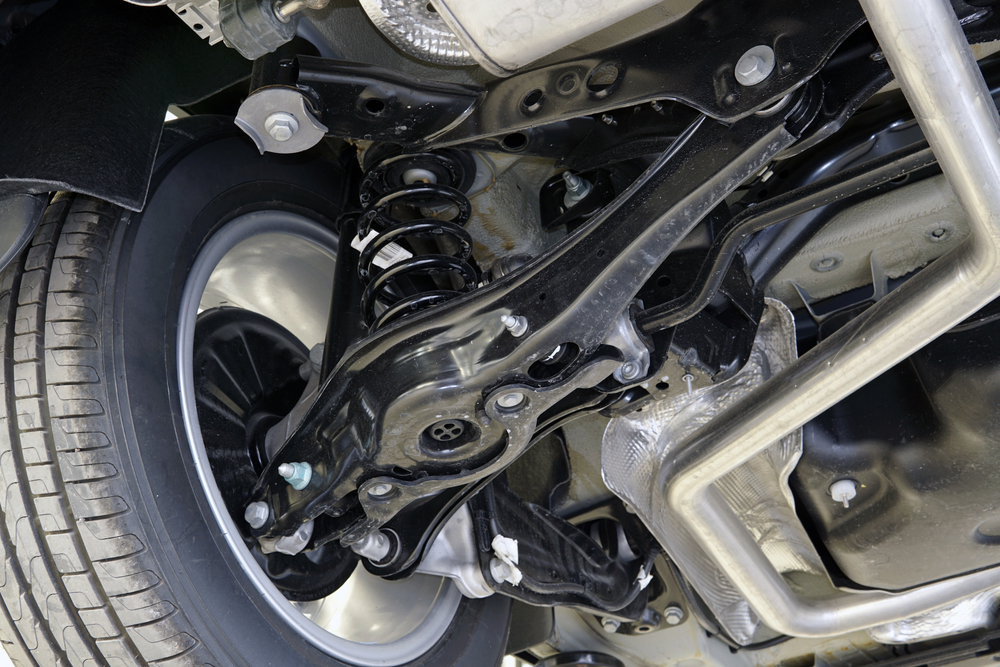
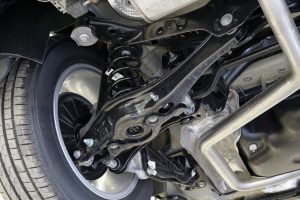
A car’s suspension connects the wheels to the body and manages how the vehicle responds to uneven road surfaces. Springs, shock absorbers, control arms, and bushings each play a part in keeping the cabin stable and the tyres pressed to the road. These components wear gradually, which means problems can develop without a sudden or obvious warning.
If you’ve found yourself wondering, “How does car suspension work?” you’re in the right place.
This guide walks through every major component, explains what happens as each wears, and covers the signs that tell you something beneath your car needs a look.
Whether you’ve had an MOT advisory, noticed something different about the way the car drives, or want to understand the system before booking it in, the answers are below.
Three Jobs Your Suspension Does Every Time You Drive
So, how does car suspension work? It begins with three tasks the system carries out together, all at the same time.
No road is perfectly smooth. Potholes, raised ironwork, expansion joints, patched tarmac: every journey puts the wheels through constant changes in surface level. Without a suspension system to absorb those inputs, every impact from the road would pass straight through the car.
That’s what your suspension prevents. Positioned between the wheels and the body, it handles:
- Absorbing Road Impact: Compressing to soak up the force of a bump or dip before it reaches the cabin.
- Keeping the Tyres on the Road: Maintaining contact between rubber and tarmac so that braking and steering remain responsive, even on poor surfaces.
- Controlling How the Body Moves: Limiting the lean you’d feel through corners, the forward pitch under braking, and the squat under acceleration.
What does car suspension do in practical terms? It manages those three tasks in the background while you concentrate on driving.
Once parts begin to wear, the balance shifts. The system can no longer manage road impact, tyre contact, and body control as effectively as it once did, and that’s the point where you start to sense that something has changed.
Your Springs and Shock Absorbers: What Each One Does
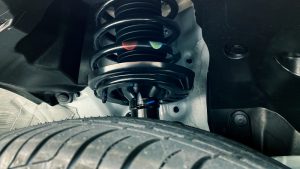
The suspension system includes several components, but two do the bulk of the work: springs and shock absorbers. They handle different stages of the same process, and understanding how they share the task makes the rest of the system clearer.
Coil springs: Fitted to most modern cars, a coil spring compresses when a wheel meets a bump. That compression is what absorbs the upward force. The spring then extends again to push the wheel back into position. Over time, springs can sag, crack, or break. A sagging spring may leave the car sitting lower on one corner. A cracked or broken one can produce a distinct knock over bumps, and it is a recognised reason for MOT failure.
Shock absorbers: If all you had were springs, the car would bounce after every bump. The shock absorber’s role is to control that bounce. Oil inside the unit is forced through internal valves each time the suspension moves, and the resistance created by that flow is what brings the movement to a stop. As shock absorbers wear, ride quality drops: the car may feel less planted, the nose may dip more under braking, and cornering can feel less controlled.
MacPherson struts: Many modern vehicles, especially front-wheel-drive models, package the coil spring and shock absorber into a single assembly called a MacPherson strut. The spring sits around the outside of the shock absorber, and the entire unit serves as both a suspension component and a structural part of the steering geometry. When a strut needs work, it is addressed as one piece.
Other configurations exist. Double-wishbone and multi-link designs, found on certain premium and performance models, keep the spring and shock absorber separate.
Whichever layout your car uses, the underlying principle is the same.
If the ride feels less composed than it used to, the car sways through bends, or the front pitches forward under braking, it is worth having the springs and shock absorbers looked at.
The team at JDK Automotive, Camberley, can assess them and let you know what needs attention.
What Keeps Your Wheels in Position: Arms, Bushings, and Links
Springs and shock absorbers deal with vertical movement. A second group of components is responsible for keeping each wheel in the right position as the suspension travels up and down.
- Control arms: These are the metal links connecting each wheel assembly to the car’s chassis or subframe. A control arm holds the wheel’s geometry steady while allowing vertical travel. When the bushings or ball joints at the ends of a control arm wear down, that geometry can shift, and the result shows in how the car steers, brakes, and wears its tyres.
- Bushings: Rubber mounts fitted at each connection point between a control arm and the chassis or wheel assembly. Their job is to absorb vibration, reduce noise, and allow controlled movement between metal parts. When bushings deteriorate, you may notice a knock or clunk at low speeds over bumps. The steering can also begin to feel vague, or the car may drift to one side, though drifting can also stem from tyre pressures, alignment, or brake issues.
- Anti-roll bar and drop links: An anti-roll bar runs across the width of the car, linking the left and right suspension. It resists body lean through corners. Short rods called drop links connect the bar to the suspension at each side.
Drop links wear over time and are a well-known MOT inspection item.
A worn drop link can produce a rattle or knock over rough surfaces. If the ball joint develops excessive play, or the dust cover has deteriorated enough to let dirt in, the outcome can be an MOT advisory or failure, depending on severity.
Knocking over bumps, uneven tyre wear, or steering that has lost its precision: any of these can trace back to control arms, bushings, or drop links.
Getting them checked sooner rather than later is a sensible move.
Call JDK Automotive, Camberley, on 01276 535585, and we’ll walk you through the next step.
Air Suspension: What It Does Differently and Where It Fails
If your car adjusts its own ride height in response to speed or load, it’s equipped with air suspension. Pressurised airbags sit at each corner in place of metal coil springs, supported by a compressor and electronic controls that regulate the pressure to keep the car level.
Shock absorbers still manage the damping side, just as they would on a conventional spring-based system.
Air suspension is fitted to certain premium models. It allows the car to raise or lower itself on the move, adapting to road conditions, driver modes, or speed.
When something goes wrong, the signs are hard to miss.
The car may settle lower on one corner or drop to one side when parked overnight. This often points to a leak in one of the airbags or a fault in the valve block that directs air between the four corners.
Once a leak develops, the compressor has to work harder to hold pressure. That additional demand can shorten the compressor’s working life over time.
Tracking down an air suspension fault calls for an expert with the right experience and equipment. The parts are model-specific, and finding where air is escaping takes careful, methodical work.
The Warning Signs of Suspension Wear
Suspension wear happens so gradually that most drivers adjust their habits without realising how far the car has moved from where it should be.
These are some of the signs of worn suspension that drivers tend to pick up on:
- Knocking or clunking: A repeated knock or clunk over speed bumps, potholes, or when turning slowly. Worn bushings, drop links, a damaged spring, or other suspension parts can all be behind this kind of noise.
- Drifting to one side: The car pulls or drifts to one side without you turning the wheel. Worn bushings or control arm ball joints can shift wheel geometry enough to cause this, though tyre pressures, alignment, or brake issues can also be responsible.
- Uneven tyre wear: Wear concentrated on one edge of the tread, or a noticeable difference between the left and right sides of an axle. This can be a sign that wheel geometry has shifted as suspension components have worn.
- One corner sitting lower: A visible difference in ride height from one side to the other. A weakened or fractured spring is one possible cause, and on vehicles with air suspension, a leaking bag can produce the same result.
- More body roll than usual: The car leaning further through corners than it used to, or feels less settled at higher speeds.
- Nose dropping under braking: The front of the car dipping further than you’d expect when you press the brakes. This can point to shock absorbers that are no longer controlling weight transfer as well as they should.
Here is the key point.
These car suspension problems and symptoms can overlap. More than one component can produce the same feeling from behind the wheel, which is why having the entire system assessed by an experienced technician is more useful than guessing at individual parts.
If anything on that list sounds familiar, get in touch with JDK Automotive, Camberley, and we can check it for you.
Suspension and the MOT: What Gets Checked and What Can Fail
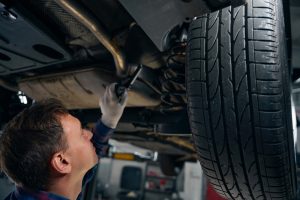
The MOT is a legal requirement for any vehicle over three years old in the UK. Your suspension is checked every time your car is tested.
The tester inspects ball joints, springs, gaiters, bushings, drop links, and shock absorbers, and excessive wear on any of them can lead to an advisory or an outright failure.
It’s worth bearing in mind that the MOT only captures the vehicle’s condition on the day of the test. It sets a legal minimum standard, not a twelve-month warranty on every component.
If suspension advisories have appeared on a previous test, addressing them before the next one is a practical decision.
So, how long does car suspension last? It depends on how and where you drive, annual mileage, and which parts are carrying the heaviest load, so keeping track of what has already been flagged stops smaller issues from developing into larger ones.
What a Thorough Suspension Assessment Involves
Different parts of the suspension can produce the same symptoms from behind the wheel.
A knocking sound over bumps in the road might come from a worn bushing, a deteriorated drop link, a cracked spring, or several parts at once. A car that drifts to one side might have a control arm issue, a bushing that has worn beyond tolerance, or something outside the suspension altogether.
This is why accurate diagnosis matters. Accurately identifying the faulty component before committing to a repair avoids wasting money on work that does not address the actual problem.
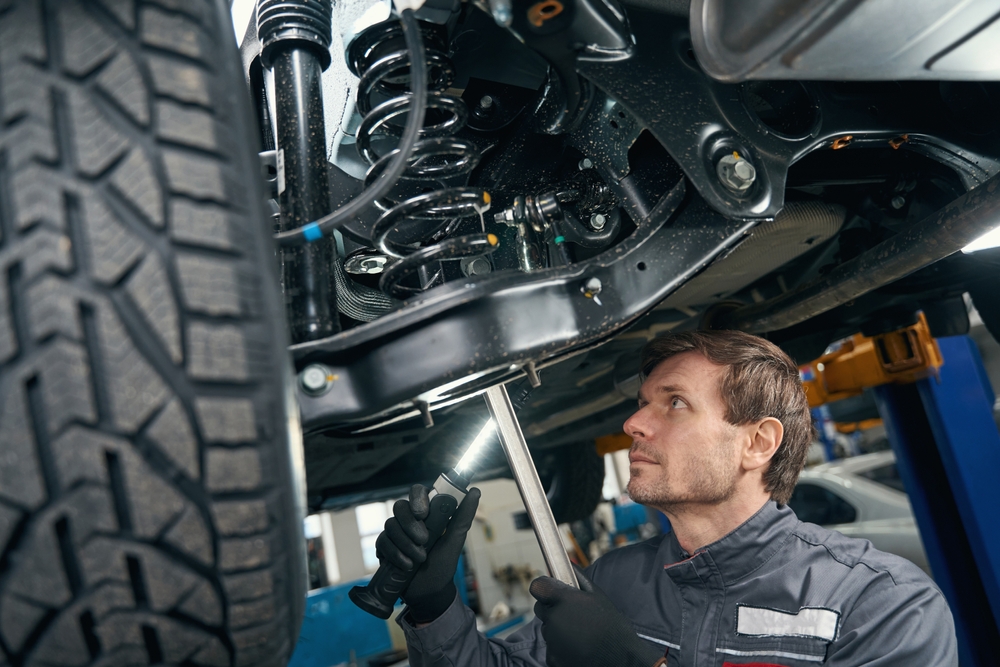
An experienced technician examines the suspension as a connected system. They trace where the wear is concentrated, assess how neighbouring parts are interacting, and explain what they’ve found before any work goes ahead.
When you can answer “how does car suspension work?”, you’re better placed to follow that conversation.
You’ll understand the explanation, and you’ll be in a stronger position to judge whether the recommended work is the right course of action. With car suspension problems and symptoms that build so slowly, that understanding makes a real difference.
Why Choose JDK Automotive, Camberley, for Your Suspension?
Understanding your vehicle’s suspension system means you can recognise problems early and have an informed conversation with your technician. The next step is to get everything underneath assessed and any necessary repairs completed to the required standard.
Suspension wear tends to progress quietly. When it is caught early, it can often be addressed before it spreads to other parts or triggers an MOT failure.
At JDK Automotive, Camberley, our technicians have the experience and the equipment to carry out a detailed suspension assessment, pinpoint what has worn, and complete any work to the standard it needs.
When you choose JDK Automotive, you get:
- Expert technicians working on your vehicle.
- A 12-month parts-and-labour guarantee on all repairs carried out.
- Clear, honest communication before, during, and after every job.
Join {{review-count}} local drivers across Camberley and Farnborough who trust us with their vehicles. We have a {{average-rating}} Google rating, which reflects the accurate repairs and excellent value.
If you’ve noticed a knock, picked up an MOT advisory, or something about the way the car handles has changed, call JDK Automotive, Camberley, on 01276 535585, and book an expert suspension inspection.
We’ll check the full suspension system and let you know what needs doing.
Frequently Asked Questions
How does car suspension work?
Your car’s suspension sits between the wheels and the body. Coil springs absorb the upward force when a wheel hits a bump, and shock absorbers control the spring’s movement to stop the car from bouncing. Control arms and bushings keep each wheel aligned as the suspension moves. When every part is in good condition, the car feels stable, planted, and comfortable to drive.
What does car suspension do?
Your suspension links the wheels to the car’s body and manages how the vehicle responds to the road beneath it. It absorbs bumps, keeps the tyres in contact with the road surface, and limits how much the body moves through corners and under braking. As parts wear, you may begin to notice changes in how the car steers, rides, or handles.
What are the signs of worn suspension?
Signs of worn suspension include a knock or clunk sound when going over bumps and potholes, or when turning at low speed, the car pulling to one side, tyre wear that’s uneven from one side of the axle to the other, one corner of the car sitting lower, more body roll through corners, and the nose dipping under braking. Because these symptoms build over time, they can go unnoticed until the wear has progressed. If the car feels different from how it used to, JDK Automotive can take a look.
How long does car suspension last?
The lifespan of suspension components varies widely. How long car suspension lasts is influenced by road quality, driving style, mileage, and which parts are under the heaviest demand. No two vehicles will wear identically, even on the same roads. Routine checks, especially in the lead-up to an MOT, are the most practical way to spot deterioration before it worsens.
Can worn suspension cause an MOT failure?
Yes. Worn suspension can lead to an MOT failure. The examiner inspects ball joints, springs, gaiters, bushings, drop links, and shock absorbers, and any of these components can trigger a failure if the wear is severe enough. If a previous MOT flagged a suspension advisory, having it looked at before the next test is a practical move.