Mercedes Brake Wear Sensor Fault
Your Mercedes had a brake pad change not long ago. The pads went in fresh, the brakes felt right, and the dashboard was clear. Then the brake warning light came on.
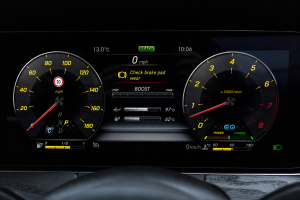
The pads still have plenty of life. Nothing about the braking itself feels any different. And yet the brake warning light is there every time you start the car.
That mismatch between what the brakes are doing and what the dashboard is saying has a technical explanation, and it sits in a part of the braking system that most people never think about.
A brake warning light does not always mean what you would assume. Pad wear triggers it. So does something else entirely. The dashboard cannot tell you which.
This article covers what that other cause is, how it develops, and what JDK Automotive, Camberley can do about it.
Healthy brake pads and a lit warning light on a Mercedes are not a contradiction. The brake wear sensor tracks pad thickness through an electrical circuit, and when corrosion breaks that circuit, the dashboard flags the same warning as a genuinely worn pad. A sensor replacement or circuit repair clears the alert and brings monitoring back to normal.
Once you see how the monitoring circuit operates separately from the braking hardware, the whole situation makes much more sense.
Inside the Brake Pad: How Mercedes Tracks Wear
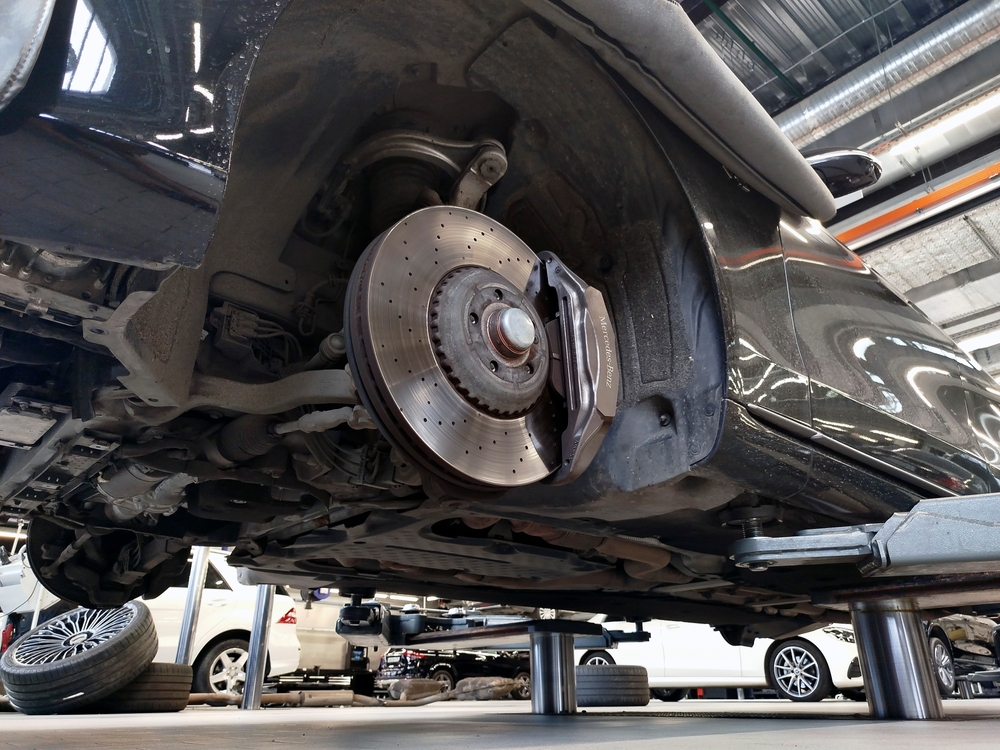
Modern Mercedes have one or two brake wear sensors: typically a single sensor fitted to an inner brake pad on the front axle, with a second at the rear on many models. They exist for one reason: to warn you when the pads have thinned to the point where they need replacing.
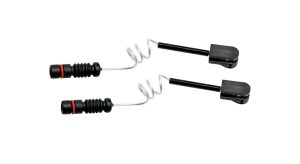
The sensor is a fine wire loop positioned at a calculated depth within the pad. As the friction material wears over thousands of miles, the brake disc eventually wears through the wire. That opens the electrical circuit, and the dashboard warning lights up.
It’s a one-use system. The wire does its job once and that’s it. Normally, the wire only breaks when the pad has reached minimum thickness, so both are replaced as a pair. In a fault-free system, the warning light is designed to appear when the pads reach minimum thickness.
So what does this mean for you when the warning is active but the pads look healthy? One answer could be the sensor circuit rather than the pads themselves.
The Sensor Circuit Fault That Mimics Worn Brake Pads
The car continuously tracks a small electrical current flowing through the sensor wire. If that current stops for any reason, whether from genuine pad wear, corrosion, connector damage, or a wiring fault, the dashboard warning triggers. The system does not distinguish between causes.
Mercedes brake sensor corrosion is the most frequent trigger our technicians at JDK Automotive encounter.
The sensor connector lives in one of the most punishing positions on the car: underneath the bodywork, beside the wheel, squarely in the path of road spray, grit, and standing water. Over time, especially on cars that regularly navigate salted winter roads, that exposure builds up.
Moisture infiltrates the connector housing. Corrosion gradually forms across the contacts. The circuit opens. The car registers this exactly the same way it would register a pad that has worn through: the warning light appears. The monitoring system responds identically regardless of the actual cause.
When the pads check out healthy but the warning persists, a visual inspection alone will not explain the fault. The sensor circuit operates independently and needs its own dedicated investigation.
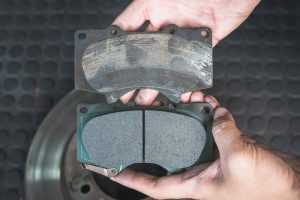
If this matches what you’re experiencing, contact JDK Automotive, Camberley and we’ll assess the full sensor circuit for you.
Brake Sensor Corrosion by Mercedes Model: What JDK Automotive Sees
Every modern Mercedes with disc brakes carries at least one wear sensor, and none of them is immune to corrosion. That said, certain models turn up in our Camberley garage more often than others:
- C-Class (2016 onwards)
- E-Class (2016 onwards)
- A-Class (2016 onwards)
The C-Class accounts for a large share of the sensor faults we handle at JDK Automotive, with the E-Class and A-Class close behind. Across all three, the story repeats: moisture and road salt attack the sensor connector, the circuit drops out, and the dashboard blames a set of pads that are nowhere near worn.
All three sit among the highest-selling Mercedes models in the UK, so the sheer number of vehicles on the road amplifies how often this fault surfaces.
Other models are not exempt. Any Mercedes fitted with brake wear sensors can develop the same corrosion fault, particularly after several winters of salted roads. If yours is not on the list above but the symptoms match, the sensor circuit is still the place to look.
JDK Automotive, Camberley: 01276 535585
What Happens When You Bring Your Mercedes to JDK Automotive
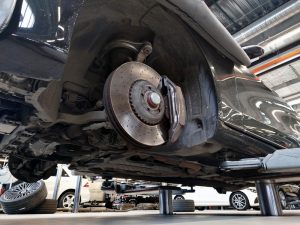
When you bring your Mercedes to JDK Automotive, Camberley with a brake warning light, the first step is a conversation. We want to know what you have noticed, how long the warning has been present, and whether anyone else has already inspected the brakes.
From there, our team runs a full technical assessment. That covers pad thickness, sensor condition, wiring integrity, and connector health. It is a step that gets overlooked when the focus lands on the pads alone, because the sensor circuit is a separate system and demands its own inspection.
If the sensor or its wiring has failed, the next step depends on what the assessment has revealed. A Mercedes brake wear sensor replacement is the most common outcome: the corroded unit comes out and a fresh sensor is fitted to the pad. When the pads are also due, we handle both at the same time. When they are not, we swap the sensor on its own. Occasionally the fault sits further along the harness or inside the connector, and the repair targets that section of the circuit instead. Once everything is back in order, our technicians may need to reset the system through manufacturer software before the warning clears and pad wear tracking resumes.
We explain what we’ve found and what’s involved before beginning any work.
The bottom line? If sensor corrosion was behind the warning and the pads haven’t worn, the braking components themselves are unaffected. Once the circuit is back in order, your Mercedes is monitoring pad thickness the way it should be.
Get in touch with JDK Automotive on 01276 535585 and we’ll talk you through what your car needs.
JDK Automotive, Camberley: Trusted Mercedes Brake Sensor Specialists
This type of fault requires more than a visual pad inspection. At JDK Automotive, Camberley, we check the full picture: pad condition, sensor health, wiring integrity, and connector state. You leave knowing exactly what triggered the warning.
By choosing JDK Automotive, you benefit from:
- An experienced team with in-depth knowledge of Mercedes braking and electrical systems
- Manufacturer-level equipment paired with hands-on technician expertise
- A 12-month parts and labour guarantee on all sensor and brake work
- Convenient access for drivers across Camberley and Farnborough
Our {{review-count}} Google reviews and {{average-rating}} rating speak to the standard of service Camberley drivers have come to expect from JDK Automotive, with consistent recognition for our clear explanations and quality workmanship.
If a brake warning light has outlasted a clean pad inspection on your Mercedes, JDK Automotive can investigate the full sensor circuit and pinpoint the cause. Call us on 01276 535585 and we’ll take it from there.
Common Questions About Mercedes Brake Warning Lights and Wear Sensors
Q: My Mercedes brake pads have been inspected and they’re healthy, but the warning light is still on. Why?
If the pads have been inspected and the warning persists, a corroded brake wear sensor is one of the most frequent causes. The sensor uses an electrical circuit to track how much pad material remains, and if corrosion damages the connector or wiring, the circuit opens and the warning activates regardless of pad condition. A thorough technical evaluation of the sensor circuit is the best way to find the cause. Speak to JDK Automotive on 01276 535585 and we’ll investigate for you.
Q: How much does it cost to have a Mercedes brake wear sensor replaced?
Pricing varies with the fault. Sometimes only the sensor needs swapping; other times the pads are due as well, or the issue sits in the wiring rather than the sensor itself. At JDK Automotive, Camberley, we assess the full circuit first, explain what we find, and agree the scope of work before anything is touched. Call 01276 535585 to discuss your car.
Q: Will a corroded brake sensor on my Mercedes affect the braking performance?
A faulty sensor does not reduce braking force. It monitors pad wear through an electrical circuit and has no mechanical link to the brake callipers or discs. When the sensor corrodes, the dashboard warning activates, but the brakes themselves continue to function. That said, any brake warning deserves prompt investigation because the light alone cannot tell you the cause.
Q: How often do Mercedes brake wear sensors need replacing?
There is no fixed replacement schedule. The sensor is built to survive as long as the pad it sits in, but road salt and moisture can corrode the circuit well before the pad wears out. If your dashboard is showing a brake warning despite healthy pads, the sensor circuit should be assessed first.