VW Intake Valve Carbon Buildup
You bought your Golf or Tiguan for the way it drove. The throttle response was immediate, the acceleration felt eager, and the engine pulled with a sharpness that made every journey satisfying. That was the car you chose.
But somewhere along the way, something has shifted. The idle has picked up a faint roughness you don’t remember. The pick-up from a standstill feels a beat slower than it should. You press the accelerator and the engine responds, but without the bite it once had.
It’s the kind of change that creeps in over months and miles, so gradually that you start to wonder whether you’re imagining it. Maybe it’s mileage. Perhaps it’s the weather.
What you’re feeling is real. It’s a process that started inside your engine long before it became noticeable, and it has been progressing with every mile since.
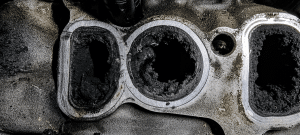
On the 2.0 TSI engine fitted to Golf and Tiguan models, fuel is sprayed directly into each cylinder rather than passing over the intake valves. Nothing keeps them clean. Oil vapour travels through the intake path, settles on the valve faces, and hardens under heat. Over tens of thousands of miles, this forms a layer of carbon that restricts airflow and reduces the quality of each firing cycle. This is VW intake valve carbon buildup, and it is one of the more common reasons for the gradual performance loss TSI owners describe.
Here’s what this guide covers: why these deposits develop, what symptoms to look for, which models are affected, and how a specialist removes the buildup to bring back what the engine has been missing.
Why the EA888 TSI Handles Fuel Differently to Previous VW Engines
The difference comes down to where and how fuel enters the engine.
In older petrol engines, fuel was mixed with air inside the intake manifold. As that mixture travelled into the cylinders, it flowed across the intake valves on the way through. The fuel acted as a cleaning agent, rinsing deposits from those surfaces with every firing cycle.
Under the EA888 2.0 badge, the VW TSI engine takes a different approach. A high-pressure injector mounted in the cylinder head sprays fuel into the combustion chamber once the inlet ports have closed. They sit upstream of the injection point and do not come into contact with the fuel spray.
This is where the problem starts. The design gives the engine finer control over fuelling, which is part of what makes the TSI feel so sharp to drive. But the intake surfaces no longer receive the washing action that older engines provided as a by-product.
Over time, the consequences of that missing cleaning step become harder to ignore.
Where Carbon Deposits Form and Why They Build Up
Every engine generates a small amount of oil vapour during normal running. A crankcase ventilation system recirculates this mist back through the intake path, where it mixes with incoming air and gets burned off inside the cylinders.
On a port-injection engine, fuel washes this oily film off the intake valves before it can accumulate. The surfaces stay clean as part of everyday operation.
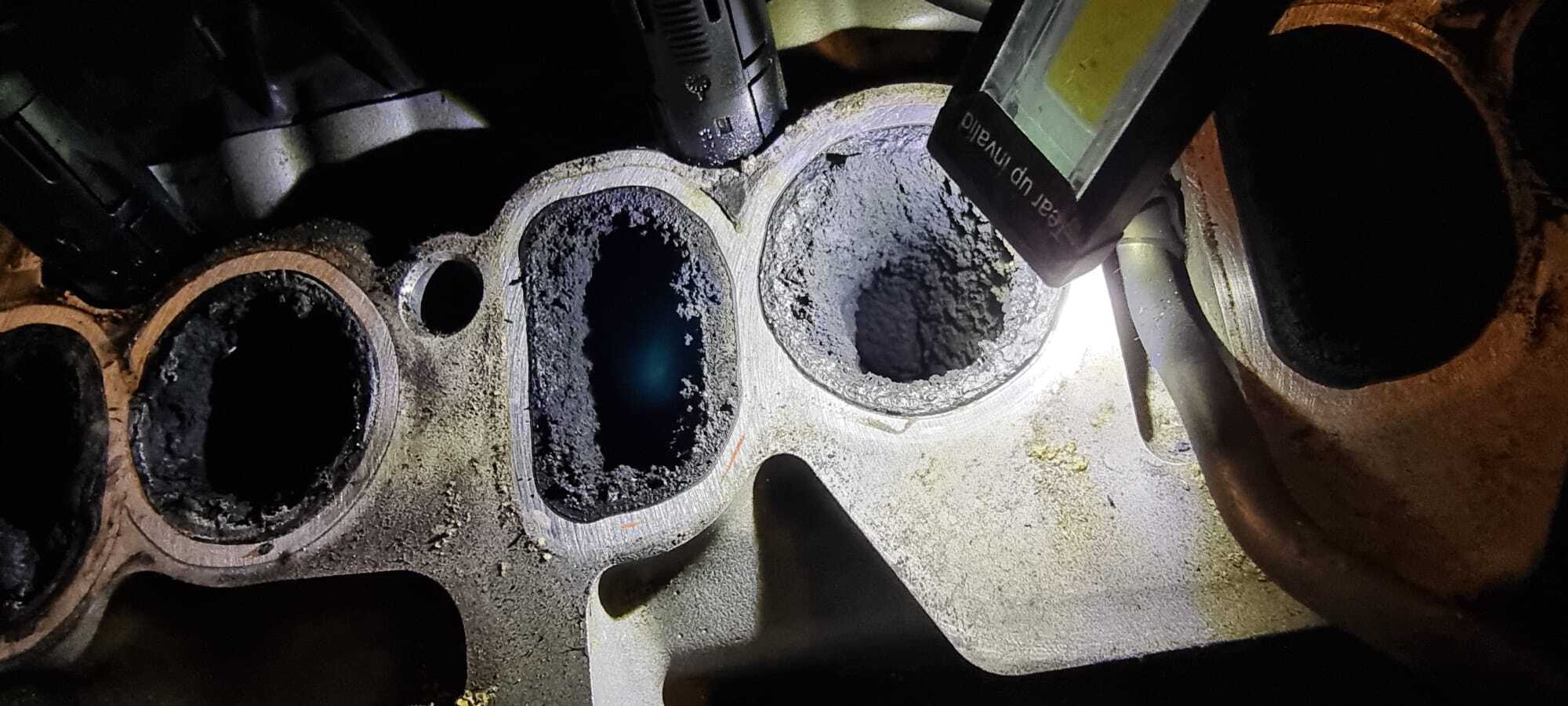
Here’s what happens on the 2.0 TSI. The oil mist passes through the intake tract, settles on the back of the valve heads, and stays there. Nothing rinses it away. Engine heat then hardens the residue into a tough carbon shell that bonds to the metal.
Each new coating lands on top of the previous one, and the buildup thickens steadily over tens of thousands of miles. As it builds, the gap around each valve narrows, restricting the volume of air reaching the cylinders. Each cylinder receives less air per stroke, and the engine gradually loses the output it was designed to deliver.
How Carbon Buildup Changes the Way Your VW Drives
Because the carbon accumulates so slowly, the warning signs arrive at the same pace. That makes them difficult to connect to a single cause, and many owners adapt their driving habits without realising. If you have been wondering “why does my VW Golf run rough after years of trouble-free ownership?”, buildup on the intake valves is one of the more common explanations.
Here are the VW Golf carbon buildup symptoms that point to restricted airflow through the intake valves:
Unsteady or lumpy idle: The engine doesn’t settle into a clean rhythm at low speed, particularly on cold mornings. You may notice a vibration through the steering wheel or feel the car trembling slightly at a standstill.
Hesitation under acceleration: The engine responds, but there is a noticeable lag before thrust arrives. Pulling away from junctions or merging onto a dual carriageway feels sluggish compared to how the car once drove.
Loss of throttle sharpness: The car no longer feels as eager when you press the pedal. VW Golf GTI carbon buildup is spotted earlier by GTI and R owners because these drivers are more attuned to how the engine delivers its output.
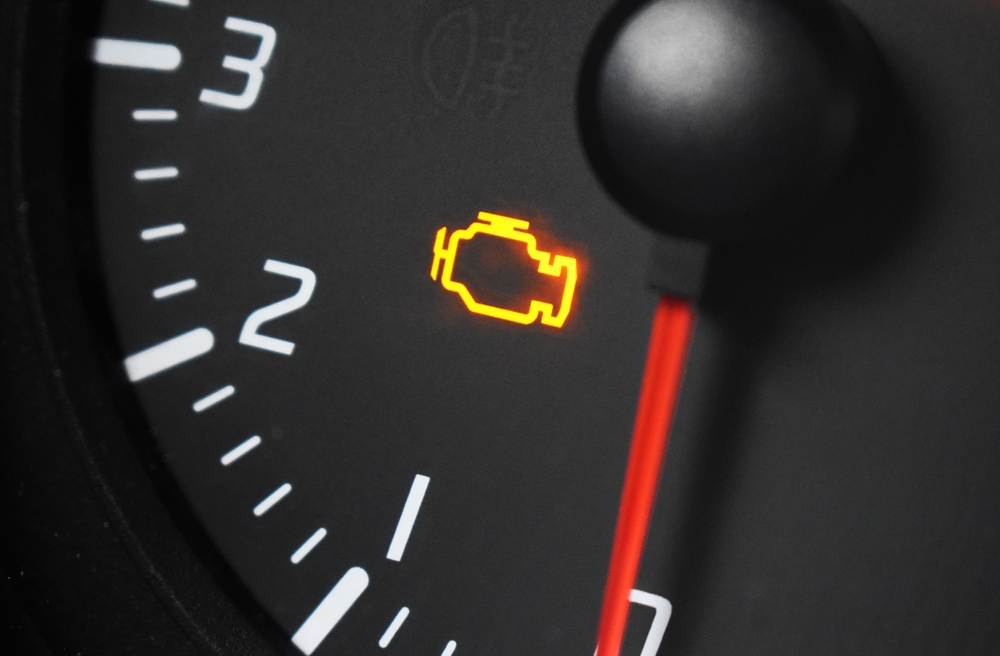
Engine management warning light: If deposits restrict airflow to a degree where misfires start to occur, the engine control unit may trigger a dashboard warning.
The reality is that other faults can produce similar effects, from worn ignition coils to sensor issues. If the way your car drives has changed, it is worth having an experienced technician assess it to confirm what’s behind the difference.
Which VW TSI Cars Develop Carbon Deposits
The EA888 2.0 TSI engine is fitted across a broad section of the Volkswagen range. But here’s the catch. Every model running this direct injection engine without a secondary set of port injectors carries the same vulnerability.
The models where intake valve carbon buildup is seen consistently across owner reports include:
Golf GTI and Golf R (Mk7, 2013 to 2020)
Golf GTI and Golf R (Mk8, 2020 onward)
Tiguan (2016 to present with the 2.0 TSI engine)
VW Golf GTI carbon buildup is widely documented across the Mk7 generation, which has now accumulated enough mileage for the issue to become a real concern. Golf R drivers may spot a change earlier, given the engine’s higher performance baseline. Tiguan intake valve carbon buildup follows the same mechanism, though Tiguan owners sometimes attribute the sluggishness to the vehicle’s weight rather than a developing engine problem.
This is not exclusive to Volkswagen. Direct injection carbon deposits appear across several manufacturers. VW TSI engines feature prominently in driver reports because so many of these cars are on UK roads, and because enthusiast buyers tend to detect changes sooner.
So what does this mean for you? The condition is well understood, and a specialist with TSI experience will know exactly what to look for. Contact our team at JDK Automotive to talk through what’s involved.
How Carbon Cleaning Works on a VW TSI Engine
Fuel additives and chemical treatments can clean the injectors and combustion chamber, but they cannot reach the back of the intake valves. That is where the carbon sits on a direct injection engine, and it is why physical removal is the approach that works.
Walnut shell blasting is one example of mechanical cleaning that has become widely adopted for this type of work. The finely ground medium is abrasive to the point of breaking apart hardened carbon deposits, yet soft to the degree that it leaves the valve faces undamaged when handled by a skilled technician.
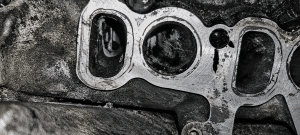
Here’s what the process involves. The intake manifold is removed from the cylinder head to expose the valves directly. A technician then directs it onto each one under measured pressure, while a vacuum system pulls away the loosened carbon and spent material at the same time. This step keeps debris from entering the internals.
What matters most is the right tooling, a clean working environment, and a technician with the knowledge to strip and reseal the assembly without introducing new problems. Once the surfaces are clear, it goes back on with new gaskets and seals.
Owners who have had this work carried out report a noticeable improvement in throttle crispness, smoother idle, and a return of the responsive feel the car had when newer.
Why Choose JDK Automotive for VW Carbon Cleaning in Camberley
VW intake valve carbon buildup is not something a standard service picks up. Diagnosing it requires a focused assessment by a team with detailed knowledge of the EA888 engine family, and addressing it calls for the right tooling alongside the skill to strip, clean, and reseal the intake system accurately. The garage you choose for this work makes a difference.
At JDK Automotive, Camberley, we work with VW owners across the local area who want specialist-level attention for their car. Our team has hands-on experience with the Golf GTI, Golf R, and Tiguan, and is equipped to carry out intake valve carbon cleaning to the standard these powertrains demand.
Here’s what sets JDK Automotive apart:
Technicians with direct knowledge of VW TSI engines and the carbon buildup patterns they develop.
A courtesy car is available so you are not left without transport while the work is carried out.
A parts and labour guarantee on all carbon removal work.
Clear communication throughout, with updates on findings and no surprise charges.
Join {{review-count}} other local Camberley drivers who’ve rated us {{average-rating}} for technical expertise, attentive service and honest communication.
Book your Golf or Tiguan in with JDK Automotive by calling 01276 535585, and let our team carry out a full intake valve assessment.
Frequently Asked Questions About VW Carbon Buildup
Can fuel additives prevent carbon buildup on VW engines?
Fuel additives travel through the injectors and into the combustion chamber, where they can clean the components in their path. On a direct injection engine such as the 2.0 TSI, the intake valves sit upstream of the fuel spray and receive no contact with the additive at all. VW intake valve carbon buildup forms on these unreachable surfaces. Once the carbon has set, a technician with the right tooling needs to remove it mechanically.
How do I know if my VW Golf has carbon buildup?
VW Golf carbon buildup symptoms include an unsettled idle, hesitation when accelerating, and a noticeable drop in throttle sharpness. These are the same signs owners describe when searching ‘why does my VW Golf run rough’ on TSI-engined models. Because other faults can produce similar effects, a specialist assessment is the best way to confirm whether carbon deposits are the cause. Get in touch with JDK Automotive to arrange an inspection.
How often does VW intake valve carbon buildup need cleaning?
There is no set service interval at which intake valve cleaning becomes due. The rate at which deposits form depends on factors including driving habits, trip length, the oil used, and the car’s overall maintenance history. Tiguan intake valve carbon buildup follows the same trajectory as the Golf range. Most owners begin to notice a shift in performance after significant mileage has accumulated, and an assessment at that point can determine whether cleaning is needed.
How much does VW intake valve carbon cleaning cost?
The final figure reflects how heavily the intake surfaces are coated and the time a technician needs to remove the manifold, complete the clean, and refit with fresh gaskets. At JDK Automotive, Camberley, our team is the smart alternative to main VW dealer pricing.
Call JDK Automotive on 01276 535585 for a quote matched to your car and its current state.