How Car Brakes Work
You press the brake pedal, and the car responds. It feels direct, controlled, and entirely predictable. That’s what you expect every time, and for most drivers, it’s something that barely crosses their mind.
But in that split second, a hydraulic system between your foot and the wheels has done something remarkable. Brake fluid under pressure has pushed callipers against spinning discs, brake pads have generated friction, and the car’s forward motion has been converted into heat at each wheel.
Most drivers don’t give any of that a second thought until something shifts, whether it’s a noise that wasn’t there before, a pedal that feels different under your foot, or a brake warning light appearing on the dashboard.
Modern hydraulic disc braking systems are highly engineered, but the principles behind how car brakes work are more straightforward than most drivers expect. When you press the brake pedal, a brake booster amplifies the force from your foot before the master cylinder converts it into hydraulic pressure. Brake fluid transmits that pressure through brake lines to callipers at each wheel, which push the brake pads against spinning discs. The friction between pad and disc is what slows the car down. Most modern cars are also fitted with ABS, which helps prevent wheel lock-up during hard braking.
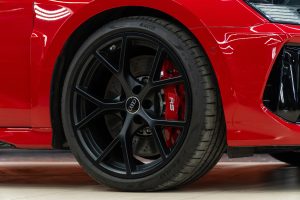
That entire sequence takes place in the time it takes your foot to move a few centimetres.
This guide covers hydraulic disc braking systems, the type you’ll find on most modern passenger cars.
If you’ve ever wondered how do disc brakes work, asked how does ABS work, or wanted to understand what a brake warning light means, this is your guide to how it all fits together.
The Job of Your Hydraulic Braking System: Pedal to Wheel
The purpose of your car’s braking system is to take a light press of the brake pedal and convert it into the force needed to slow all four wheels. Most modern passenger cars do this using a hydraulic disc braking system, and the process follows the same sequence:
- Brake pedal: You press down on the pedal, which drives a rod toward the brake booster.
- Brake booster (servo): A unit between the pedal and master cylinder that amplifies the force from your foot, so you don’t need to push hard to generate braking force. Most cars use a vacuum-assisted booster, though some newer models have an electric version.
- Master cylinder: Takes the amplified force and uses internal pistons to convert it into hydraulic pressure, pressurising the brake fluid.
- Brake fluid: A specially formulated hydraulic fluid designed to transmit pressure through the system with minimal compression.
- Brake lines and hoses: Rigid metal pipes and flexible hoses that carry the pressurised fluid to each wheel.
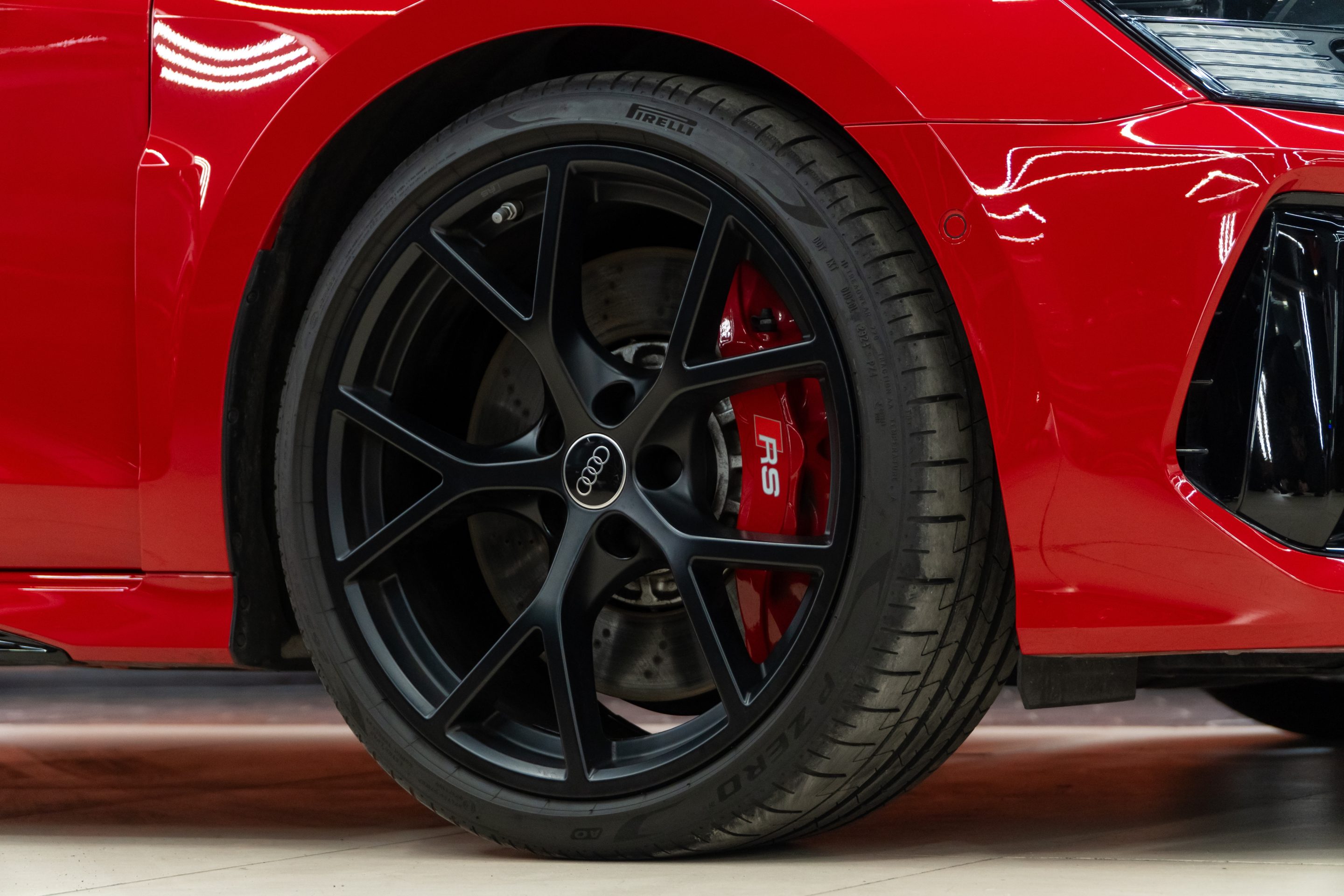
- Brake callipers: Housings mounted over the brake disc at each wheel, containing pistons that are pushed outward when the pressurised fluid arrives.
- Brake pads: Friction components inside each calliper, made from materials such as ceramic, semi-metallic, or organic compounds. They press firmly against the spinning disc.
- Brake discs: Most are cast-iron plates bolted to each wheel hub. When the pads press against them, friction is created, and the car slows down.
All eight steps take place in the time your foot moves a few centimetres.
The harder you press, the greater the hydraulic pressure, and the more firmly the pads press against the disc.
Release the pedal, and the pressure drops. The pads pull back, and the wheels rotate freely. That’s the car braking system explained in practical terms.
What Brake Discs Do and What Happens as They Wear
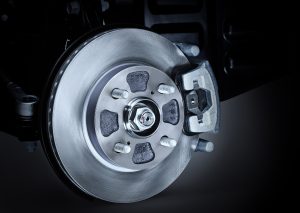
Most brake discs are cast-iron plates fitted to the wheel hub at each corner of your car. They’re the surface the brake pads press against, and the friction between the two is what slows you down. That’s the answer to the question many drivers ask: “How do disc brakes work?”
Heat and friction are generated every time you use the brakes, and over time, both gradually wear the disc surface. Signs of disc wear that drivers may notice include:
- Surface scoring: Grooves or marks across the disc surface, which can result from abrasive particles, corrosion, or uneven pad wear affecting pad-to-disc contact.
- Uneven wear: Parts of the disc wearing at different rates, which can sometimes produce a pulsing sensation through the brake pedal.
- Heat stress: Repeated hard braking can lead to uneven wear or heat-related distortion, which may cause a judder through the pedal or steering wheel.
A disc that’s heavily worn or damaged can affect braking consistency and reduce how effectively the pads make contact. The rate of wear depends on driving style, road conditions, stop-start traffic, and the brake materials fitted.
If you’ve noticed a vibration or pulse when you brake, the team at JDK Automotive, Camberley can assess disc condition and advise whether they need attention.
Why Brake Pads Wear and How Your Car Warns You
Brake pads sit inside the calliper and make direct contact with the spinning disc every time you brake. They’re often manufactured from composite friction materials, including ceramic, semi-metallic, and organic-based compounds, and their job is to create the friction that slows the car. As the friction material wears down, the pads eventually need replacing.
Modern vehicles may use one or more built-in systems to let you know when pads are wearing low:
- Audible squealer strip: A small metal tab fitted to the pad. When the friction material wears down enough, the tab contacts the disc, producing a high-pitched metallic squeal.
- Electronic wear sensor: A sensor in the pad that is activated once wear reaches a set point, triggering a brake warning light on the dashboard.
Not all vehicles have both. Some rely on the audible indicator alone, while many premium models use an electronic sensor as well.
But how do you know when to replace brake pads? From the driver’s seat, the signs of worn pads can include:
- A scraping or grinding noise when braking, particularly at lower speeds.
- A change in braking response, or the brakes feeling less effective than usual.
- A brake warning light on the dashboard, though this can also indicate other braking-related issues.
Pads that are left too long without replacement can damage the disc surface, leading to more extensive and expensive work. The experienced team at JDK Automotive, Camberley can check pad thickness and advise whether replacement is needed now, or whether there’s still usable friction material left.
What Brake Fluid Does and Why It Needs Replacing Over Time
Brake fluid is the hydraulic medium that makes the connection between your brake pedal and the callipers at each wheel. When you press the pedal, the fluid transmits hydraulic pressure from the master cylinder through the brake lines, driving the callipers into action.
Over time, brake fluid naturally absorbs moisture from the air around it. The braking system is largely sealed, but small amounts of moisture can enter through seals, joints, and flexible hoses.
Here’s the concern. As moisture content rises, the fluid’s boiling point drops. Under heavy or sustained braking, if parts of the fluid reach boiling temperature, vapour bubbles can form in the hydraulic system. Because those vapour bubbles compress under pressure, the brake pedal can start to feel soft or spongy, and braking performance can be reduced.
Moisture can also contribute to internal corrosion in callipers, brake lines, and other metal components.
That’s why manufacturers recommend periodic brake fluid replacement. How often depends on the manufacturer and driving conditions, so it’s worth checking your owner’s manual or speaking to a technician for guidance.
At JDK Automotive, Camberley, the team can test your brake fluid condition and let you know whether replacement is recommended to help keep your braking system performing safely.
What ABS Does During Emergency Braking
ABS stands for Anti-lock Braking System, and it’s a feature on most modern passenger cars. If you’ve ever wondered, “how does ABS work?”, it’s designed to stop the wheels from locking during hard or emergency braking, which helps you keep steering control when it matters most.
Without ABS, heavy braking can cause one or more wheels to lock up, especially on surfaces with reduced grip. Once a wheel locks, you lose a significant amount of steering control, and that’s what ABS is engineered to prevent.
ABS uses speed sensors at each wheel. If it detects that a wheel is about to lose traction under braking, it reacts in milliseconds:
- It identifies that a wheel is decelerating rapidly enough that it may lock.
- It reduces brake pressure to that specific wheel just enough to allow it to turn again.
- It reapplies pressure almost immediately, repeating the cycle many times per second.
So what should you expect when ABS activates? You’ll feel a rapid pulsing or vibrating through the brake pedal, and you may hear a buzzing or clicking sound. Both are a normal part of the system doing its job, not a sign of a fault.
If the ABS warning light stays on during normal driving, that’s a different matter. It means the system has detected a fault, and a technician should take a look as soon as you can arrange it.
Understanding Brake Warning Lights and What They Mean for Your Car
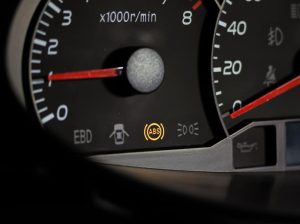
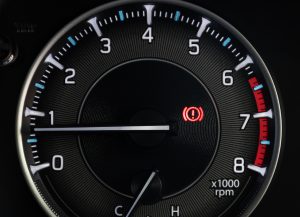
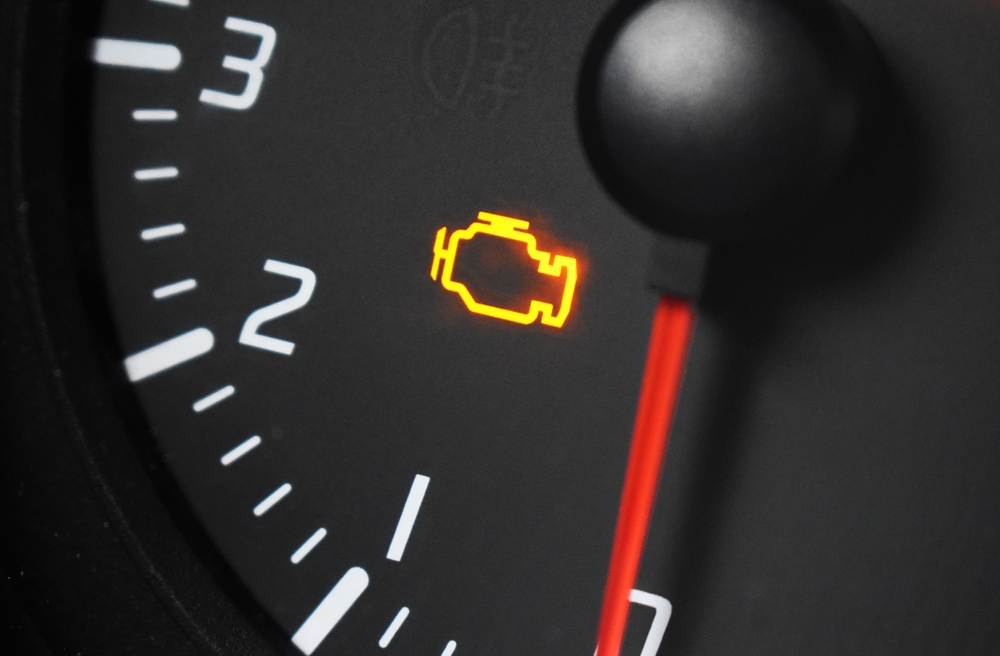
Most cars have more than one brake-related warning light on the dashboard, and each can indicate a different issue. Knowing which one you’re seeing helps you decide how to respond.
The three warnings you’re most likely to encounter are:
- Brake pad wear warning: Triggered by the electronic wear sensor when the pads wear past a set threshold. It doesn’t require an immediate stop, but it should be booked in as a priority.
- Handbrake or brake system warning: Can appear for more than one reason. It may illuminate when the parking brake is on, but it can also indicate low brake fluid, a sensor fault, or another braking system issue. If it stays on after you’ve fully released the parking brake, it needs looking at as soon as possible.
- ABS warning light: If this stays on during normal driving, the Anti-lock Braking System has flagged a fault. Standard braking should still work, but the ABS safety function may not be available. Have it checked by a technician promptly.
If a brake warning light appears while you’re driving and you’re unsure what’s behind it, drive cautiously, avoid heavy braking where possible, and follow your manufacturer’s guidance or contact a technician.
Whatever warning you’re seeing, the experienced team at JDK Automotive, Camberley can diagnose the cause and talk you through what needs doing.
Why Your Brakes Benefit From Periodic Inspections
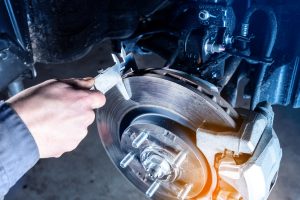
Brake wear builds gradually. Pads lose material over time, brake fluid absorbs moisture, and disc surfaces are exposed to heat and friction on every drive.
A brake inspection as part of a full vehicle service will cover pad thickness, brake disc condition, fluid quality, warning light status, and the condition of brake lines and hoses.
Your brakes are one of the most important safety features on your car. Keeping them in good condition isn’t just about performance; it’s about protecting you, your passengers, and everyone else on the road.
If it’s been a while since your brakes were last inspected, or if something about the way they feel has changed, that’s all the reason you need. Knowing how car brakes work puts you in a stronger position, but a professional inspection is how you make sure everything is working the way it should be.
Why Drivers Choose JDK Automotive, Camberley for Brake Inspections, Servicing and Repairs
Your brakes deserve the same level of care and attention as any other critical system on your car. When something needs checking, you want to know it’s being handled by people who understand braking systems inside and out.
At JDK Automotive, Camberley, our experienced technicians use dealer-level equipment to inspect, service, and repair braking systems across a wide range of makes and models. We work to manufacturer standards and talk you through our findings before any work is carried out.
When you choose JDK Automotive, you benefit from:
- A 12-month parts and labour guarantee on all brake work.
- Experienced technicians with dealer-level equipment covering all makes and models.
- A full explanation of findings and recommendations before any work goes ahead.
- Convenient location serving drivers across Camberley and Farnborough.
Join {{review-count}} local Camberley drivers who’ve trusted us with their vehicles. They’ve rated us {{average-rating}} on Google for thorough explanations and fair pricing.
Whether it’s an unfamiliar noise, a brake warning light, or a pedal that doesn’t feel the way it should, JDK Automotive, Camberley is here to help. Call us on 01276 535585 to arrange a brake inspection.
FAQ
How do car brakes work?
Here’s how car brakes work in most modern vehicles. When you press the brake pedal, the braking-assist system amplifies the force applied to the master cylinder, which converts it into hydraulic pressure. Brake fluid carries that pressure through the brake lines to the callipers at each wheel, which push the brake pads against the spinning brake discs. The friction between pad and disc is what slows the car. Most modern cars are also fitted with ABS to help prevent wheel lock-up during hard braking.
How do I know when to replace brake pads?
There are several signs that your brake pads may need replacing. A high-pitched metallic squeal when braking can be the built-in wear indicator contacting the disc. You may also notice that braking doesn’t feel as responsive as it used to, or on vehicles fitted with electronic wear sensors, a brake warning light may appear on the dashboard. If any of these apply, or if you’ve noticed anything else unusual when braking, it’s worth booking in with JDK Automotive, Camberley to have your brakes checked.
Why does my brake pedal feel soft or spongy?
A soft or spongy brake pedal can often have more than one explanation. Brake fluid that has absorbed too much moisture over time may develop a lower boiling point, allowing vapour bubbles to form in the hydraulic system during heavy braking. Those bubbles compress under pressure, which is what causes the soft pedal feel. Air in the brake lines, a hydraulic leak, or a fault with the master cylinder are other possible causes. Because any of these can affect braking effectiveness, it’s worth getting it checked promptly. The team at JDK Automotive, Camberley can test the fluid and assess the system.
What does it mean when the brake warning light comes on?
That depends on which brake warning light is showing. A brake pad wear light is triggered when at least one set of pads is approaching its recommended replacement limit. A red brake system warning can indicate low brake fluid, a parking brake issue, or another braking system fault. If you’re not sure which light you’re seeing, the team at JDK Automotive can help identify the cause and advise on what needs to happen next.