BMW AC Compressor Failure
Your BMW’s air conditioning has stopped blowing cold, and the phrase ‘AC compressor’ has entered the conversation for the first time. It’s not a term most BMW owners think about until something goes wrong.
This guide explains what the compressor does, how the electromagnetic clutch controls it, and why understanding the difference between a refrigerant shortage and a compressor fault matters before you spend anything.
If your BMW is blowing warm air, making unusual noises from the engine bay, or the air conditioning has simply stopped engaging, you’re dealing with a fault that a qualified technician needs to investigate thoroughly.
We’re covering the electromagnetic clutch type specifically, which is fitted to many BMW models, including the 3 Series, 5 Series, and X5 from around 2016 onwards. If you’re not sure which type yours has, a qualified technician can confirm it.
Learn to spot the difference between a compressor fault and a refrigerant shortage, and why the distinction matters.
BMW AC compressor failure prevents the system from pressurising refrigerant. The cabin won’t cool, no matter the climate control setting. Symptoms include warm air, grinding or squealing from the engine bay, or intermittent cooling. A qualified technician with dealer-level information and equipment can confirm the fault.
So let’s start with the basics: what does your BMW’s compressor actually do?
What Does the Compressor Actually Do?
The compressor is the component that keeps your air conditioning working. It takes low-pressure refrigerant gas and compresses it into high-pressure gas. That pressure difference drives refrigerant through every other component in the system.
Each of those components handles a specific stage:
- The condenser sheds heat from the pressurised gas, converting it to liquid refrigerant.
- The expansion valve reduces the pressure sharply.
- The evaporator absorbs cabin heat through the cold refrigerant, delivering cool air to your vents.
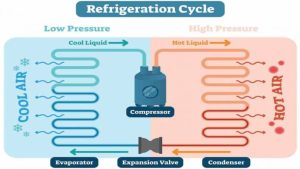
Remove the compressor from the equation, and the whole chain stops. Refrigerant can’t circulate, heat can’t transfer, and the air from your vents stays warm.
BMW fits different compressor types depending on the model. Some run continuously and vary their output. Others use an electromagnetic clutch that connects and disconnects the compressor from the engine’s auxiliary belt.
So How Does the Compressor Know When to Start?
Your compressor is bolted to the front of the engine, driven by the auxiliary belt. The belt keeps a pulley spinning on the compressor whenever the engine runs, but the compressor itself doesn’t operate continuously. The pulley turns freely on a bearing without engaging the internal mechanism.
The electromagnetic clutch bridges that gap. Your climate control sends an electrical signal to the clutch coil the moment it needs cooling. That coil creates a magnetic field which pulls a pressure plate against the spinning pulley, locking the compressor shaft into action so refrigerant begins circulating.
When cooling demand drops, the signal cuts out. The magnetic field disappears, the pressure plate separates, and the compressor stops turning. The pulley continues spinning on its bearing until the next cooling request arrives.
This engage-disengage cycle happens thousands of times over your BMW’s life. Each cycle wears the coil, pressure plate, and pulley bearing a fraction further. Eventually, one of those components reaches a point where the compressor either won’t engage at all or slips when it tries to.
What Does BMW AC Compressor Failure Sound and Feel Like?
When a BMW’s AC compressor fails, the symptoms vary depending on which part has worn out. These are the patterns our technicians encounter most often:
- Warm air with no other warning signs. You switch on the AC, and nothing changes. The vents blow the same temperature as before. No noise, no warning light, just a complete absence of cooling. This often points to a BMW AC compressor not engaging because the clutch coil or an electrical connection has failed.
- A grinding or squealing noise when the AC runs. BMW air conditioning compressor noise that starts when you activate the AC and stops when you turn it off typically indicates a worn pulley bearing. This tends to worsen as the bearing deteriorates further.
- Intermittent cooling that comes and goes. Cold air for a while, then warm, then cold again. This cycle can repeat for weeks and is easy to dismiss. It usually points to a clutch that engages but can no longer hold under load, and the pattern tends to become more frequent over time.
These are common symptoms, but other faults within the AC system can look similar. If your BMW air conditioning stopped working or sounds different, only a thorough technical evaluation can confirm what’s actually happening.
If your BMW air conditioning stopped working as expected, or you’ve noticed a BMW air conditioning compressor noise that wasn’t there before, contact JDK Automotive in Camberley on 01276 535585. We can identify the cause and explain your options.
If the AC is Blowing Warm, Why Wouldn’t a Regas Fix It?
A regas is often the first thing BMW owners try when the air conditioning loses its cooling. Sometimes that’s exactly what was needed. But when the compressor has failed or the clutch won’t engage, no amount of fresh refrigerant changes anything.
For a regas to work, the compressor must be functioning. A clutch that won’t engage means the compressor never turns on, and the refrigerant stays still. Internal compressor damage means the system can’t generate the pressure required to cool. In both cases, the regas achieves nothing.
This has become a more expensive mistake on newer BMWs. Current models run R1234yf refrigerant, which costs significantly more than the older R134a type. Paying for a regas when the compressor can’t use it is money spent for no result.
There’s a seasonal element to this as well. Compressor faults tend to develop gradually. While the AC may still run well enough for demisting during cooler months, the early signs of compressor wear are easy to miss when you’re not expecting cold air. By summer, the deterioration has had months to progress, and the first warm day reveals that your BMW air conditioning has stopped working.
If you’ve already had a regas and your BMW’s air conditioning still isn’t blowing cold, BMW AC compressor failure is the likely explanation rather than a refrigerant shortage.
Why Compressor Repair Needs Expert Work

Any work on the refrigerant side of your BMW’s air conditioning is legally regulated. The technician carrying out the work must hold a recognised refrigerant handling qualification and use dedicated recovery and recharging equipment.
R1234yf, the refrigerant used in current BMW models, requires equipment with fittings that differ from those in older R134a systems. It must be recovered and recharged to precise quantities. Getting this wrong risks causing further damage to the system.
When our technicians at JDK Automotive carry out a BMW air conditioning system assessment, we start with a thorough technical evaluation to identify what’s actually failed before recommending any work. Our technicians have dealer-level information and equipment, the required qualifications, and the hands-on experience to work on your BMW’s refrigerant system. You’ll know exactly what’s needed and what it involves before anything goes ahead.
Whether you’re dealing with BMW AC compressor not engaging, unusual noises, or air conditioning that’s simply stopped cooling, give us a call. We’ll give you a straight answer.
BMW AC Compressor Repair in Camberley: Why Choose JDK Automotive?
A BMW AC compressor failure problem needs a garage equipped with the right qualifications, the correct tooling, and proven experience to solve it. At JDK Automotive, Camberley, our technicians bring all three to every job.
Here’s what sets us apart for BMW air conditioning work across Camberley and Farnborough:
- Qualified technicians holding the required refrigerant handling certification for all current BMW air conditioning systems.
- Dealer-level technical information and equipment for accurate fault identification.
- All compressor repair work is backed by a 12-month guarantee covering parts and labour.
- Transparent pricing with no hidden costs; you’ll know the full scope of work before we begin.
- Join the {{review-count}} local drivers who’ve given us a {{average-rating}} rating for accurate repairs and excellent value.
If your BMW’s air conditioning needs investigation or repair, contact JDK Automotive on 01276 535585.
Frequently Asked Questions About BMW AC Compressor Problems
How do I know if my AC compressor has failed, or if it just needs a regas?
If the compressor or its electromagnetic clutch has failed, adding refrigerant does nothing. Signs include warm air from the vents when the AC is on, a compressor that won’t engage, or cooling that comes and goes. A technical evaluation using dealer-level information and equipment is needed. Contact JDK Automotive on 01276 535585.
Why does it matter which garage does the AC compressor repair?
Not every garage is legally qualified or equipped for this work. Technicians must hold a recognised refrigerant handling qualification. Equipment must be dedicated recovery and recharging equipment specific to R1234yf. At JDK Automotive, Camberley, our technicians hold the required qualifications and possess the correct tooling. We diagnose compressor faults accurately rather than suggesting unnecessary regasses.
What causes the electromagnetic clutch to fail on a BMW AC compressor?
The clutch engages every time the AC demands cooling and disengages when the system has done its job. Multiply this across thousands of on-off cycles over the life of your BMW, and you understand why the clutch eventually wears out. The electromagnetic coil weakens, the pressure plate surface deteriorates, or the pulley bearing develops play and noise. Any of these can cause the clutch to fail entirely or slip under load. A technical evaluation will identify which specific component has reached the end of its service life.
Why does my AC work fine one season, then fail the next?
Compressor faults develop gradually, often without obvious signs. While the AC may still run for demisting during cooler months, without the demand for cold air a failing clutch or worn bearing goes undetected. By the time warmer weather arrives and you expect cold air, the wear has been progressing for months. If your BMW’s AC has recently stopped working, contact JDK Automotive on 01276 535585.