Mercedes Clutch Replacement

Clutch slipping, dragging and difficult gear changes can be warning signs of clutch problems on manual Mercedes models
You’d think a clutch either works or it doesn’t. One day it’s fine; the next, it’s gone.
But that’s not necessarily the case on a manual Mercedes. The bite point creeps higher over weeks, pull-aways from junctions start needing a touch more throttle, and a faint smell of burning lingers after crawling through traffic. There’s no sudden failure. Just a slow shift that’s hard to pin down while it’s happening.
On models such as the A-Class and CLA, these changes can be so gradual that your habits adjust around them before you notice anything at all.
The real concern isn’t the symptom on its own. It’s the uncertainty: is the clutch on its way out, has something else in the system developed a fault, or is the car still fine to drive?
Mercedes clutch replacement may become necessary when parts of the clutch system wear or develop faults. Slipping, dragging, and incomplete clutch release can each point to a different underlying cause, and the fault doesn’t necessarily sit with the clutch itself. Other components within the clutch assembly can be responsible, too.
Below, we’ll look at what slip and drag mean in practice, how the dual mass flywheel fits into the picture, and why a Mercedes clutch replacement goes beyond swapping a single part. If your clutch pedal has started to feel different or something just isn’t right, JDK Automotive, Camberley, can help you work out what’s happening.
How the Clutch Works and Wears on a Manual Mercedes
The clutch sits between the engine and gearbox. It allows power to pass through when engaged, and breaks that connection when you press the pedal so you can select the next gear.
Example of a dual-mass flywheel and clutch assembly
Inside the assembly, a disc lined with friction material is held against the flywheel. That contact is what transfers drive from the engine to the transmission. Each gear change, each pull-away, each stop wears that lining down by a small amount.
The clutch is a service item, not a part built to last the life of the car. The wear is by design.
What determines how long it lasts is largely down to the conditions the car faces. Vehicles that spend most of their time in stop-start traffic, on hill starts, or towing will go through their friction material sooner than those covering steady motorway miles.
Mercedes Clutch Slipping: More Than One Possible Cause
When a clutch begins to slip, the engine revs rise, but the car doesn’t build speed at the same rate. You’ll tend to feel it most under load: pulling away on a gradient, or pushing through in a higher gear.
A hot, acrid smell after heavy use in traffic or on a climb can go with it. Mercedes clutch slipping is one of the first issues owners tend to pick up on.
So where does the fault come from? In many instances, the friction material has worn down to a point where it can no longer grip the flywheel effectively. But that’s not the explanation for every car. Contamination from an oil leak can bring on similar symptoms.
This is why it shouldn’t be left. If the slip goes unchecked, the excess heat it produces can speed up deterioration across nearby parts of the assembly. Over time, that heat can reach other areas of the system.
Clutch Drag on a Mercedes A-Class: What Happens When It Won’t Release
Clutch slip is a failure to grip. Clutch drag is the opposite problem: the clutch won’t release when you put your foot down, and some drive keeps passing into the gearbox. The result? Gear selection becomes difficult.
On these manual Mercedes models, the first thing drivers tend to report is trouble engaging first or reverse gears from a standstill. A crunch as you select a gear, or the car nudging forward at idle with the clutch pressed flat and a gear still engaged, are both indicators of this condition. The term many owners search for is Mercedes A-Class clutch dragging, though the same fault shows up across other Mercedes too.
If you’ve been asking yourself, “Why is my Mercedes clutch hard to change gear?”, drag is one possible explanation. Several different faults across the clutch and related components can produce these symptoms: a worn master or slave cylinder, air trapped in the line, the clutch disc itself, the release bearing, and other associated parts.
Hydraulic problems in particular can alter how the clutch responds. Warning signs to take seriously include:
- Pedal drops to the floor: the clutch feels slack, with barely any firmness when you press it.
- Pumping required: the clutch has to be pumped before it disengages.
- Slow return: comes back up slowly, or stays down.
- Brake fluid warning: on many Mercedes models, the clutch and brake systems share a fluid reservoir, so a clutch-side leak can trigger a brake fluid warning on the instrument cluster.
If any of these describe what you’re experiencing, let JDK Automotive, Camberley, take a look before the problem progresses further.
The Dual Mass Flywheel: What It Does and Why It Comes Into the Picture
On a manual Mercedes, the clutch doesn’t work in isolation. It’s paired with a component called the dual mass flywheel (DMF). Because they work together, technicians assess the condition of both during clutch-related repairs.
The DMF sits between the engine and the clutch. Its purpose is to absorb the vibrations the engine produces before they reach the transmission, smoothing out what the driver feels through the pedals and cabin.
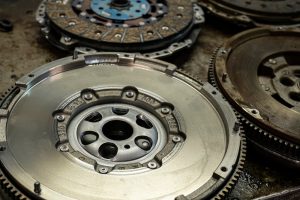
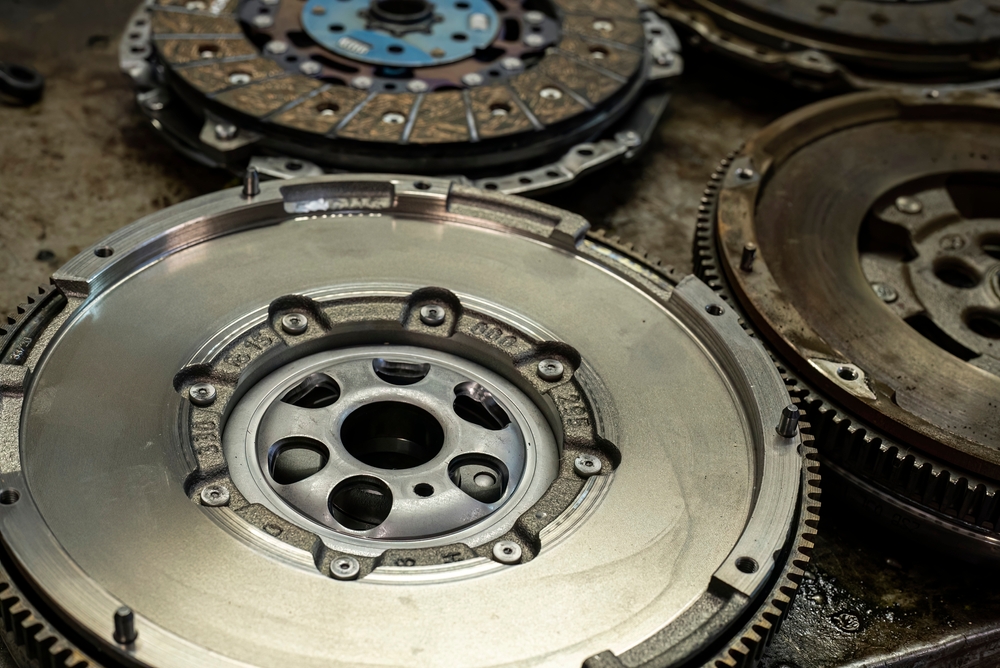
Example of clutch and flywheel components during repair
Over time and mileage, the DMF can wear. When that happens, vibration at idle, juddering on pull-away, or a rattling noise can develop. These symptoms don’t confirm that the DMF needs replacing on their own, but they do call for a thorough assessment.
This is where it ties into the clutch. The Mercedes dual mass flywheel is assessed during clutch work as standard. With the gearbox removed, a worn DMF can be renewed at the same time as the clutch. Leaving it for later would mean repeating much of the same work. And if a worn DMF is left in place, vibration or judder can carry over even after a fresh clutch has been fitted.
Why a Mercedes Clutch Replacement Can Involve More Than the Clutch
Replacing the clutch on a Mercedes isn’t a case of swapping one part for another.
On manual Mercedes, including the A-Class and CLA, the clutch sits between the engine and the gearbox. There’s no way to reach it without the transmission coming out first.
Once it’s out, technicians can see and assess everything in and around the clutch area: the disc, the pressure plate, the dual mass flywheel, and the surrounding components. These work together as a system, so examining the full picture helps identify where the fault lies and whether any additional parts need attention.
There’s more to it than that. The concentric slave cylinder can also feature in a Mercedes clutch replacement. On these models, it can only be assessed once the gearbox has been removed.
What the repair ultimately involves depends on what the technicians find. In some cases it’s the clutch alone; in others, the DMF or other elements within the assembly need renewing too.
That’s where the assessment at JDK Automotive, Camberley, comes in: pinning down what’s behind the symptoms before we go ahead with the repair.
How JDK Automotive, Camberley, Handle Mercedes Clutch Faults
When clutch trouble has been confirmed, the next step is building a clear picture of the car’s condition.
Because slipping, dragging, gear-selection difficulty, and vibration can each stem from more than one source, our team start with a conversation about what you’ve been noticing and how long it’s been going on. A full assessment follows, and where the car can be driven safely, a road test lets them feel the symptoms at first hand.
If the evaluation confirms a clutch fault, the gearbox comes out. Our technicians support and lower it on a transmission jack, working to manufacturer procedures and drawing on dealer-level technical data alongside their own experience.
Once it’s clear, they assess the clutch, dual mass flywheel, release bearing, slave cylinder, and any associated parts. The clutch itself is the planned replacement, but if the inspection reveals further wear or a developing fault, we walk you through the findings before carrying out any additional work.
Where hydraulic components have been renewed or disturbed, our technicians bleed the system and road test the car to confirm that the clutch engages and disengages correctly. We’ll also talk you through how to bed the new clutch in.
Noticing any of the signs covered above? Call JDK Automotive, Camberley, on 01276 535585 and we’ll arrange a time to carry out a thorough assessment.
Why Choose JDK Automotive, Camberley, for Your Mercedes Clutch Replacement?
Clutch work on a manual Mercedes can go further than fitting a new disc and pressure plate. What the inspection reveals, combined with the symptoms you’ve described, shapes the full scope of what’s needed.
The job calls for technicians who know these clutch assemblies well, follow manufacturer procedures throughout, and have the right setup for safe gearbox removal and refitting.
When you bring your A-Class or CLA to JDK Automotive, you benefit from:
- Technicians experienced in Mercedes drivetrain work, backed by dealer-level technical data and the equipment to match
- A 12-month parts and labour guarantee covering clutch, flywheel, and associated repairs
- Open communication from diagnosis through to completion, so you know what’s been found and what it means before any work starts
- A team based across Camberley and Farnborough that carries out clutch and transmission work as a core part of the workload
{{review-count}} local drivers rate us {{average-rating}} on Google. The feedback highlights honest advice and clear explanations about what a car needs.
If your clutch is slipping, dragging, or behaving differently from how it used to, JDK Automotive can look into it and lay out your options.
Give us a call to book your A-Class or CLA in, and we’ll start by finding out what’s behind the symptoms.
FAQ: Your Mercedes Clutch Questions
How much does a clutch job cost on a Mercedes A-Class or CLA?
The answer comes down to what the inspection finds. In some cases, only the clutch itself needs replacing. In others, the dual mass flywheel, slave cylinder, or other components within the system may also need to be addressed. JDK Automotive carries out a full assessment before any decisions are made, and we’ll explain what’s needed and why before the work goes ahead.
What does Mercedes clutch slipping actually feel like?
You’ll notice the engine revs rising while the car’s speed stays flat, particularly pulling away or under load in a higher gear. A burning smell after hill climbs or stop-start traffic can follow. These are signs worth having checked. If they sound familiar, speak to JDK Automotive, Camberley, sooner rather than later.
Do I have to replace my Mercedes dual mass flywheel with the clutch?
That varies from car to car. A Mercedes clutch replacement requires the gearbox to be out of the way, and that’s what makes it the right time to check the DMF. If wear is showing, renewing both together avoids the need to carry out much of the same work again separately.
Why is my Mercedes clutch hard to change gear, and can I keep driving?
Difficulty getting into first or reverse gears at a standstill can be a sign of Mercedes A-Class clutch dragging, where the clutch fails to release fully. A number of faults across the clutch system can be behind it, and working out which one requires hands-on inspection. Carrying on isn’t recommended because the symptoms tend to worsen. Get in touch with JDK Automotive, Camberley, to have it looked at as soon as possible.