VW Polo Power Steering Fault
Mr G’s Volkswagen Polo had already undergone repair work elsewhere. A replacement steering pump and motor unit had been fitted, yet the problem seemed unresolved.
“The repair’s been done, but the steering is no better. The warning light’s still there.”
That was how Mr G described the situation when he got in touch. Despite parts already being replaced, the Volkswagen Polo continued to feel heavy to steer, with no clear explanation as to why the fault was still present.
After time off the road without progress, it was becoming increasingly unclear whether the issue had been properly identified.
The next step was to get the vehicle booked in for a full technical evaluation at JDK Automotive in Camberley. This gave our technicians the opportunity to step back, review what had already been done, and apply a structured testing process from the outset.
Now it was our turn to take a closer look and work through the problem methodically.
Initial Checks Confirm a VW Polo Power Steering Fault
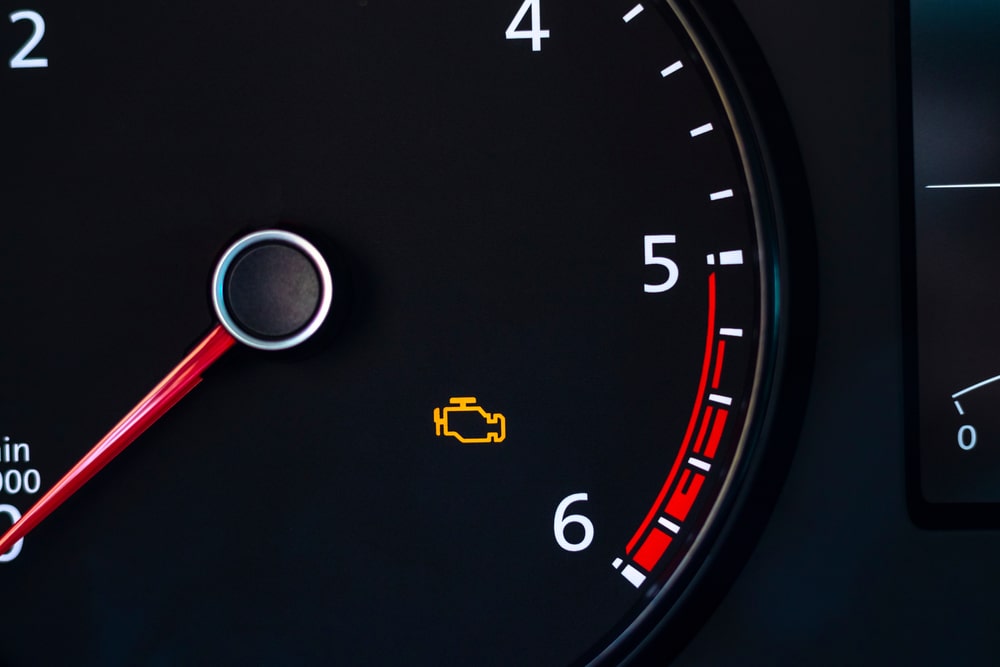
When Mr G’s Volkswagen Polo arrived at JDK Automotive in Camberley, we already had a clear account of the symptoms: the power steering was not operating, and a steering warning light was visible on the dashboard.
A replacement steering pump and motor unit had been installed before the vehicle came to us. Despite this work, there had been no change in behaviour. With that background in mind, we progressed to the next stage of assessment.
Our technicians began by reviewing the work already carried out and performing a visual inspection of the steering system. There were no signs of fluid loss, and no visible damage to the recently fitted component. With no obvious mechanical concerns identified, we moved on to check the onboard computer.
Using Volkswagen dealer-level diagnostic equipment, we carried out a full system scan of the steering control module. This revealed a single fault stored within the system:
- Fault code 00816 – Power steering sensor (G250)
Fault code 00816 points to a signal issue within the power steering system. However, on its own, the code does not identify the underlying cause. Further investigation was required to establish whether the issue related to the steering sensor, an incompatibility with the installed pump and motor unit, a configuration issue following installation, or another factor affecting system operation.
With the fault code confirmed and the symptoms consistent, we moved on to the next stage of our structured diagnostic process to determine what the steering system was still missing and why assistance had been disabled.
Understanding What Triggered This VW Polo Power Steering Fault
With the fault symptoms confirmed and fault code 00816 recorded, we moved into a structured investigation to understand why the Volkswagen Polo’s power steering system had disabled assistance.
Step 1: Establishing electrical integrity at the steering pump
Before assessing control signals or configuration, it was essential to confirm that the steering pump and motor unit had a stable electrical foundation.
- Using the manufacturer’s wiring information, we identified the primary power supply and ground paths at the pump connector.
- Both circuits were tested with the ignition switched on to confirm consistent voltage and grounding.
What we found:
The electrical supply to the pump and motor unit was correct. Voltage levels were present as expected, and the ground connection was secure. With no indication of an electrical feed issue, we were able to rule this area out early in the investigation.
Step 2: Assessing control data and module communication
Once the basic electrical checks were complete, attention turned to how the steering system was communicating internally.
Using our ODIS diagnostic tool, the same platform used by Volkswagen main dealers, we accessed the steering control module to review system behaviour in greater detail.
- Fault memory was checked to confirm stored issues.
- Serial data from the steering module was reviewed to assess signal validity.
- The pump’s internal control electronics were responsive and maintaining communication with the vehicle network.
However, the signal from the steering sensor (G250) was not being received. As a result, the system had disabled steering assistance as a protective measure.
What we found:
No additional fault codes or network errors were present. The control module itself was functioning correctly, but it could not interpret the steering sensor input. This ruled out a complete module failure and shifted the focus towards a signal format or configuration mismatch.
Step 3: Checking compatibility of the fitted pump and motor unit
Given that a steering pump and motor unit had already been replaced prior to the vehicle arriving with us, verifying the suitability of that unit became a critical step.
Even visually similar pump assemblies can behave very differently if their internal configuration does not align with the vehicle’s original specification.
- We verified the part number of the fitted unit against Volkswagen’s parts data.
- The vehicle’s build information was reviewed to confirm which steering system variant it was originally equipped with.
- We also considered known differences across VW Polo steering systems of this generation.
What we found:
The pump and motor unit installed on the vehicle did not correspond with the specification originally used on this model. Because of this mismatch, the steering control module was receiving data it did not recognise, triggering fault code 00816 and shutting down power assistance.
Step 4: Confirming programming and coding status
Compatibility alone is not enough for correct operation. The steering pump and motor unit must also be programmed to the vehicle so that all signals are interpreted correctly.
- Using ODIS, we accessed the pump’s control module to review its coding and adaptation status.
- Module information was checked to determine whether the required programming had been completed following installation.
What we found:
Checks confirmed that the replacement pump and motor unit had not been programmed to the vehicle. As a result, the steering system was unable to recognise the steering sensor input, preventing the return of power-assisted steering.
This led us to the underlying conclusion that the fitted unit was unsuitable for this Volkswagen Polo and had been left without the necessary coding to function correctly.
Fitting the Correct Steering Pump and Finalising System Setup
After confirming why the previous repair had not resolved the issue, we explained the findings to Mr G and outlined the work required. With approval in place, the repair was carried out.
- The correct steering pump and motor unit was sourced by matching the vehicle’s VIN with Volkswagen parts data to ensure compatibility with this Volkswagen Polo.
- Prior to fitting the replacement unit, the surrounding wiring, connectors, and hydraulic lines were checked to confirm there were no external issues that could affect the repair.
- The incompatible pump and motor unit was removed and replaced with the correct assembly. Connections were secured carefully before the system was reassembled.
- The power steering system was refilled with fluid and bled of excess air in line with Volkswagen guidance to ensure the hydraulic circuit was operating correctly.
- ODIS was then used to complete the required steering system configuration so the new pump could communicate correctly with the vehicle.
- Fault memory was cleared and operational checks were carried out, confirming the warning light was no longer present and steering assistance had returned.
Following testing, the steering system operated normally, and assistance was restored as expected.
Repair Completed With Power Steering Confirmed
Following testing, the steering system operated normally, and assistance was restored as expected.
To confirm the outcome, we took the Volkswagen Polo for a road test, which confirmed the outcome.
After previous work elsewhere failed to resolve the issue, the fault was successfully addressed by identifying the compatibility and configuration problems within the steering system. Applying a structured technical evaluation allowed the underlying cause to be resolved rather than relying on further component replacement.
With all final checks complete, the vehicle was returned to Mr G with the power steering system operating as intended.
Structured VW Polo Power Steering Fault Diagnosis in Camberley
If your VW Polo has a steering warning light showing or your power steering isn’t working as it should, the fault needs a careful technical evaluation to understand what the issue is within the steering system as a whole. As this case demonstrates, issues linked to fault code 00816 power steering sensor (G250) can persist if the parts and how they’re installed aren’t reviewed together.
At JDK Automotive in Camberley, our technicians follow a structured process when assessing VW power steering faults, or any other issue your car is experiencing.
Why drivers choose JDK Automotive:
- Technicians experienced in diagnosing VW steering system faults
- Structured technical evaluation focused on system response and data
- Access to manufacturer data for accurate part matching and configuration
- Clear explanation of findings before any work is approved
- 12-month parts and labour guarantee for added reassurance
If you are based in Camberley, Farnborough, or the surrounding area, and are experiencing a VW Polo power steering fault, our team is here to help.
Our {{average-rating}} star Google rating from {{review-count}} customer reviews reflects the level of service and care people experience when they bring their car to us.
Call JDK Automotive on 01276 535585 to arrange a power steering assessment and get clear answers about what your VW Polo needs.